“We Find Hope by Action”: Caritas Ukraine Delegation at the World Mercy Congress in Vilnius
Tetiana Stawnychy, president of Caritas Ukraine, delivered a testimony on Works of Mercy in the Face of War at the 6th World Apostolic Congress on Mercy, which concluded Thursday in Vilnius, Lithuania, after six days of prayer, testimony, and reflection.
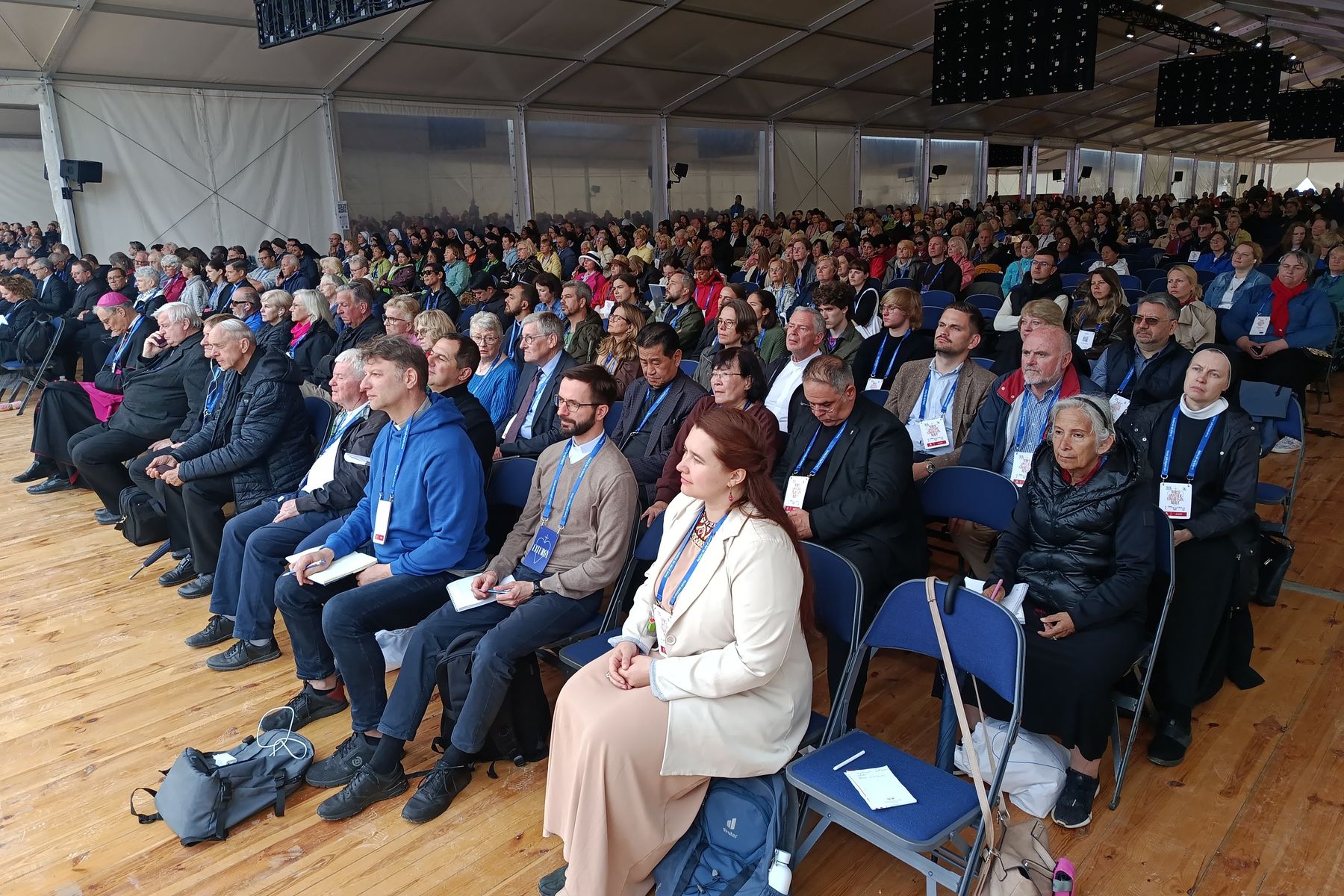
The congress, organized by the Vatican’s Dicastery for Evangelization and held in Lithuania for the first time, brought together more than 5,000 participants from 52 countries under the theme “Building the City of Mercy.” Vilnius was chosen in part due to its historical significance as the birthplace of the Divine Mercy devotion, the original image, painted in 1934, remains preserved in the city’s Shrine of Divine Mercy in the Old Town. Among the speakers were Ecumenical Patriarch Bartholomew and a recorded message from Pope Leo XIV. Previous editions of the congress have taken place in Rome, Kraków, Bogotá, Manila, and Apia, Samoa.
Speaking to an international audience, Tetiana Stawnychy offered a portrait of four years of full-scale war that moved between the concrete and the spiritual — from the logistics of emergency aid to what she called the fundamental question of what it means to stay human.
“War is chaos and destruction,” she said, “but it’s not only a political crisis or a military crisis. At its very core, war rips at relationships. It rips at the core of what it means for us to be human.”
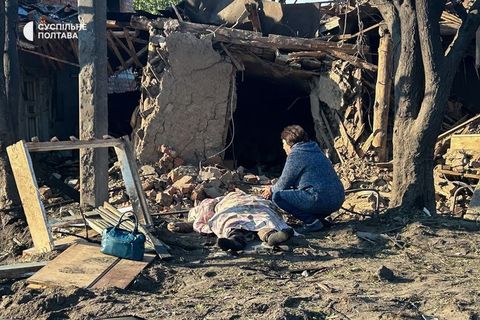
In Ukraine, she explained, Caritas’s response has moved through many layers: basic humanitarian aid: food, water, clothing, shelter, accompanying displaced people and helping them integrate into new communities; repairing homes damaged by strikes; and accompanying survivors of captivity through the long process of recovery from trauma and torture.
At the center of all of it, she said, is what Caritas calls the spirituality of encounter — or, as she prefers, the mystery of encounter.
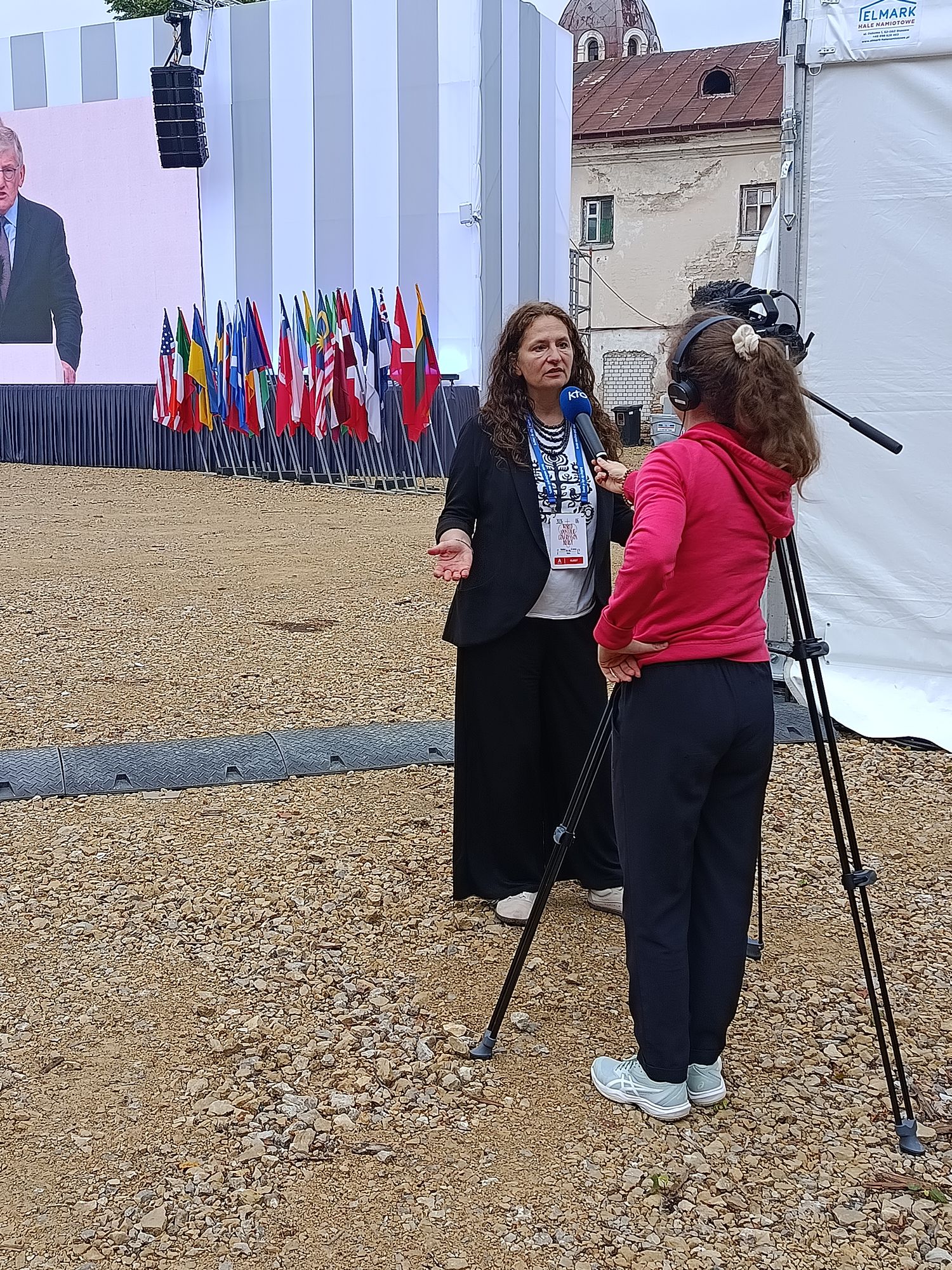
The encounter, she noted, transforms not only those receiving help but those offering it. One striking statistic illustrated the point: in 2022, forty percent of Caritas Ukraine’s volunteers were people who had themselves been displaced, who had come to receive aid and then returned to help the next wave of arrivals.
Facing the question she is often asked — how do you continue after four years? — Caritas president was candid: “I can’t say that we’re not tired and that we’re not carrying pain. But we find hope by action.”
In the face of that fatigue, she said, Caritas Ukraine has oriented itself around three guiding principles: finding the best way forward through constant innovation; not losing the human person at the core of every intervention; and continuing to build cooperation, on the premise that “there’s no single person, no single organization, no single country that can withstand it on their own.”
War, she concluded, is not only a political or military crisis. “It is a spiritual one. There’s a spiritual battle at play. And that’s another reason why it’s so important that we hold this anchor — this anchor of humanity, this anchor of how God created us to be in communion, to be in relationship.”
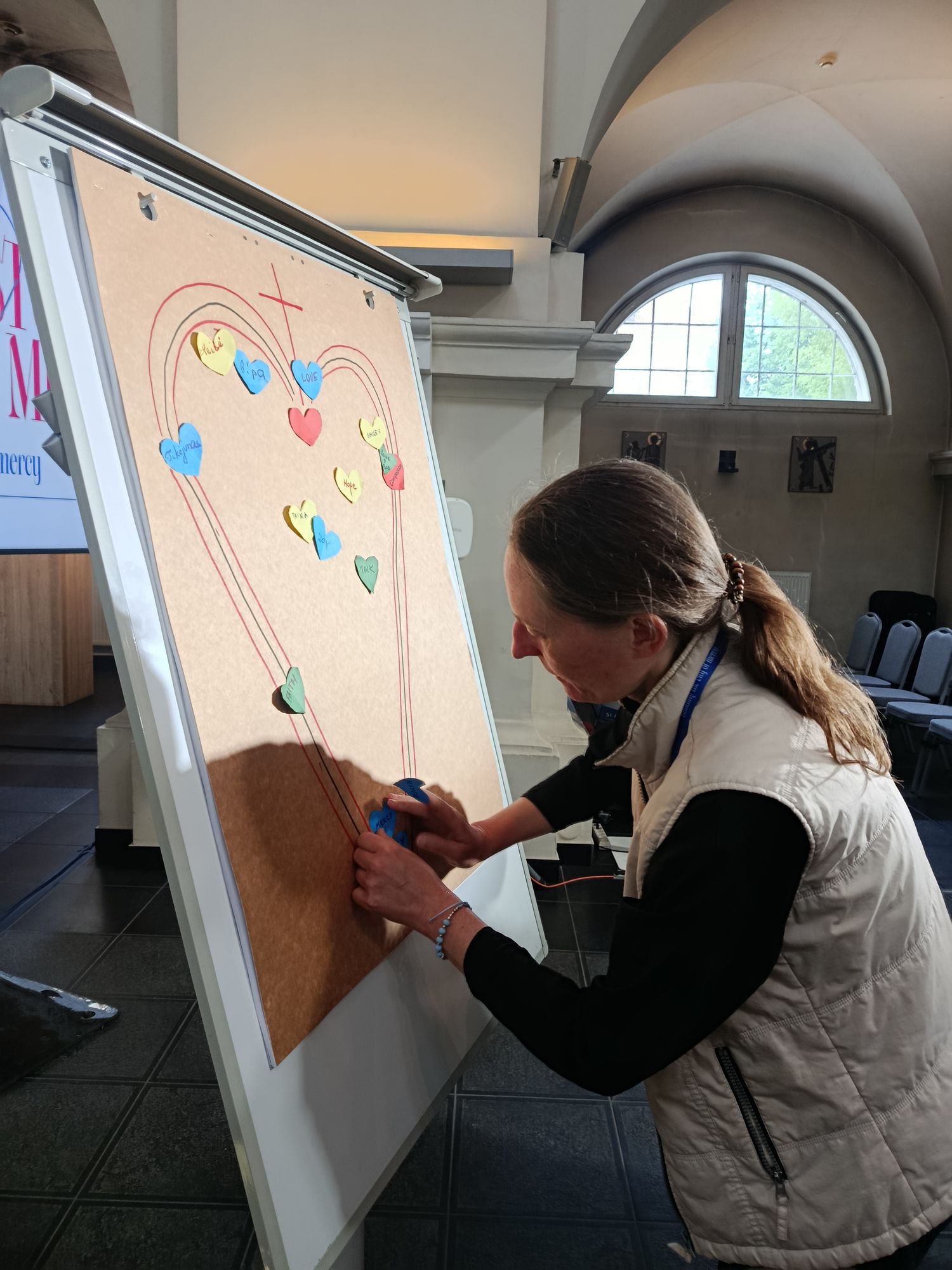
Beyond the plenary sessions, the Ukrainian delegation organized a workshop titled “Mercy in Action,” drawing 25 participants from around the world. Hanna Homeniuk, director of the Department for Social Cohesion Programs, said the workshop was exploring how to remain human during war, and how helping others is itself what sustains us. “We talked about the fact that we need to know not only how to give support, but how to receive it,” she said.
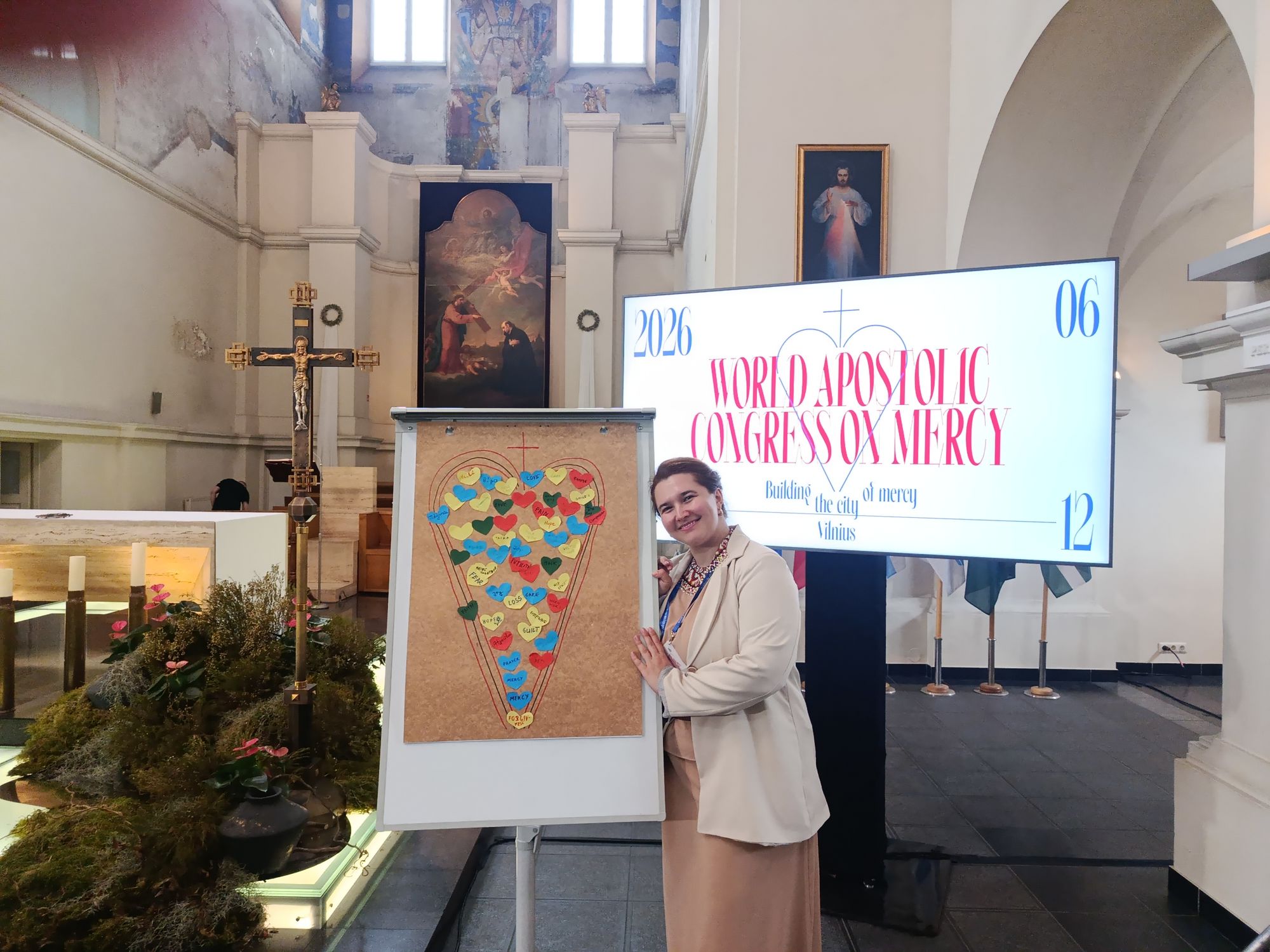
The workshop centered on shared reflection: participants spoke about moments when they had felt supported by others, moments when they had offered support themselves, and what it means to be together in difficult times. “Many people said they realized they don’t actually know how to receive support,” Homeniuk noted. “And that matters, because self-care is what sustains us right now — especially Ukrainians. Taking care of yourself, taking care of those close to you, and living life even during war.” The workshop closed with a shared prayer: participants formed a heart and asked God for help for those they hold dear. “This is a wounded heart,” said Homeniuk, “that can be healed.”
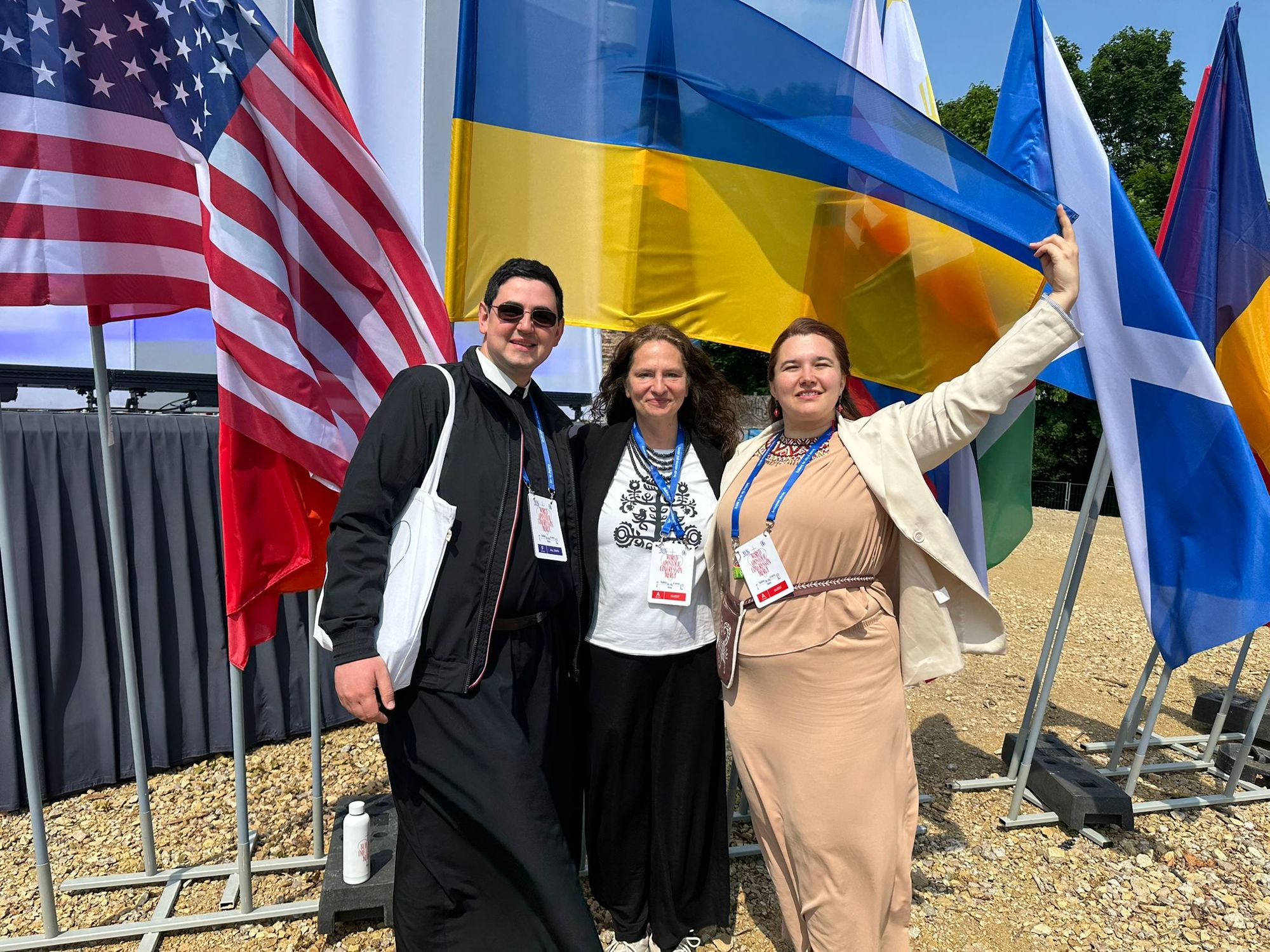
The Caritas Ukraine delegation also presented the WASHinWAR photo exhibition and hosted a public discussion on the long-term humanitarian and environmental consequences of the war. Olha Sydii, coordinator of the international advocacy campaign # WASHinWAR, and Uliana Krys, Partnership Manager at Caritas Ukraine, spoke about the destruction of water infrastructure, the challenges of rebuilding affected communities, and the importance of keeping international attention focused on Ukraine’s water security and early recovery.
“The WASHinWAR campaign helps us speak to the world in the language of concrete consequences for people,” said Olha Sydii. “When a person loses access to water, a safe environment, or basic services — that is about the future of an entire community. That is why we work to ensure that questions of the aggressor’s accountability, Ukraine’s early recovery, and humanitarian support remain on the international agenda.”
Uliana Krys highlighted the unique challenges of humanitarian work during wartime. “For most humanitarian crises, there is a clear sequence: an emergency, response, stabilization, and recovery. In wartime, that logic is disrupted. We can help people recover from an attack, restore services, or support a community, but we never know where the next attack will occur or who will need assistance tomorrow. That is why we must constantly be prepared to begin recovery again and again.”
Throughout the week, the # WASHinWAR exhibition in central Vilnius has been drawing thousands of residents and visitors daily. Photographs by Ukrainian photographers tell the stories of people and communities living through war, illustrating the humanitarian, environmental, and social consequences of Russia’s aggression against Ukraine.
Press Service of Caritas Ukraine