The Remains of Yevhen Konovalets to Be Repatriated to Ukraine: Bishop Ihor Rantsya Leads Panakhyda in Rotterdam
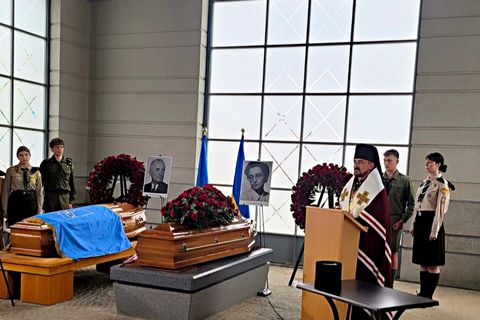
On August 11, at the Crooswijk Cemetery in Rotterdam, the remains of Yevhen Konovalets, a colonel in the Army of the Ukrainian People’s Republic and the founder and first leader of the Organization of Ukrainian Nationalists (OUN), were exhumed. Bishop Ihor Rantsya of the Paris Eparchy of St. Volodymyr the Great of the Ukrainian Greek Catholic Church led a Panakhyda prayer service at the coffin.
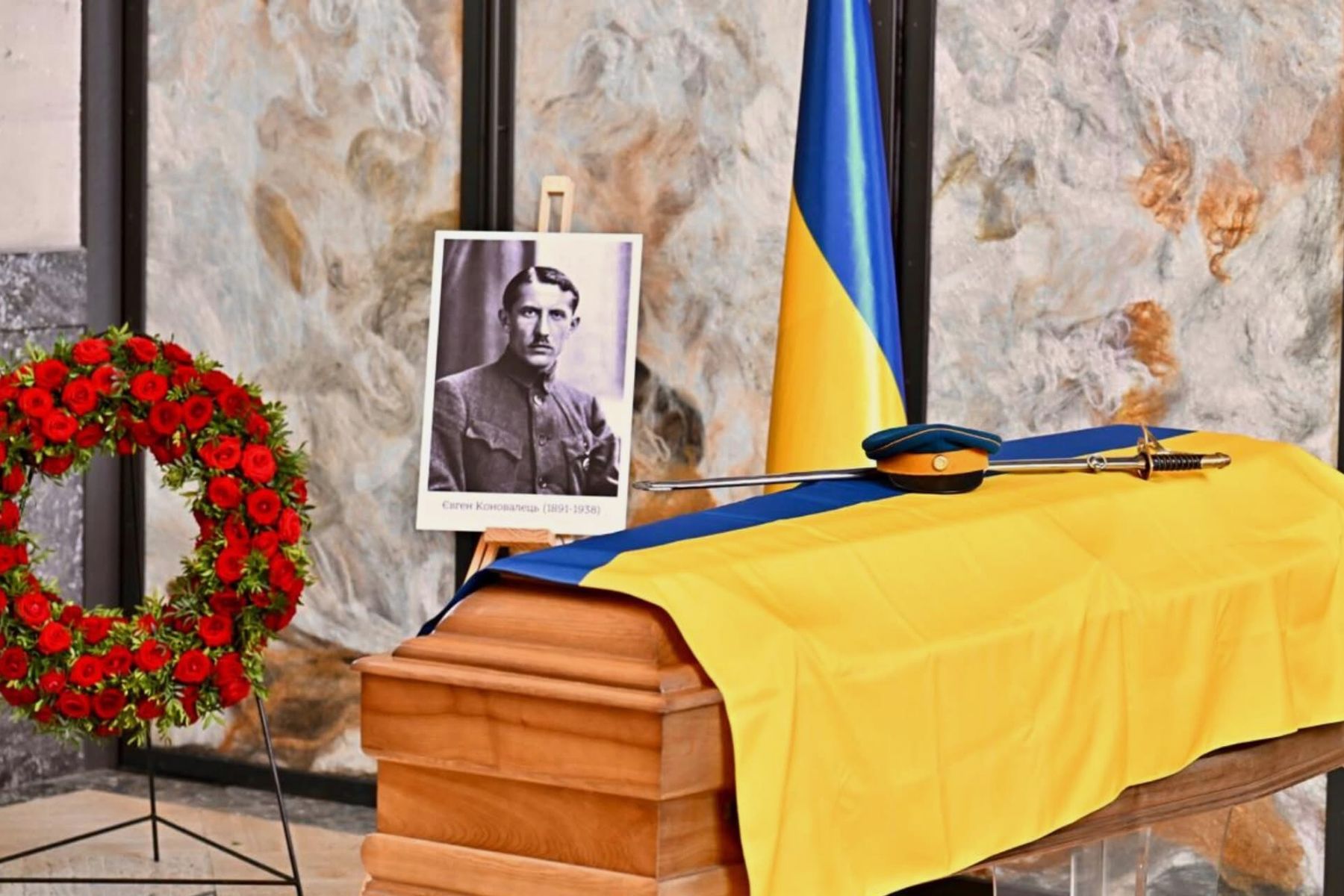
This was reported by the press service of the Paris Eparchy of the Ukrainian Greek Catholic Church.
Concelebrating with the bishop were priests of the Ukrainian community in the Netherlands: Fr. Mykola Butsak, Fr. Mykola Palyukh, and Fr. Lyubomyr Sitko.
Also joining the prayer were Iryna Vereshchuk, Deputy Head of the Office of the President of Ukraine; Andriy Kostin, Ambassador of Ukraine to the Netherlands; Oleksandr Alferov, Head of the Ukrainian Institute of National Remembrance; as well as representatives of the Ukrainian community in the Netherlands, “Plast,” and Ukrainian organizations in Canada.
Preparations for the repatriation of the remains are being carried out on the instructions of the President of Ukraine in cooperation with the Office of the President, the Ministry of Foreign Affairs, and the Ukrainian Institute of National Remembrance.
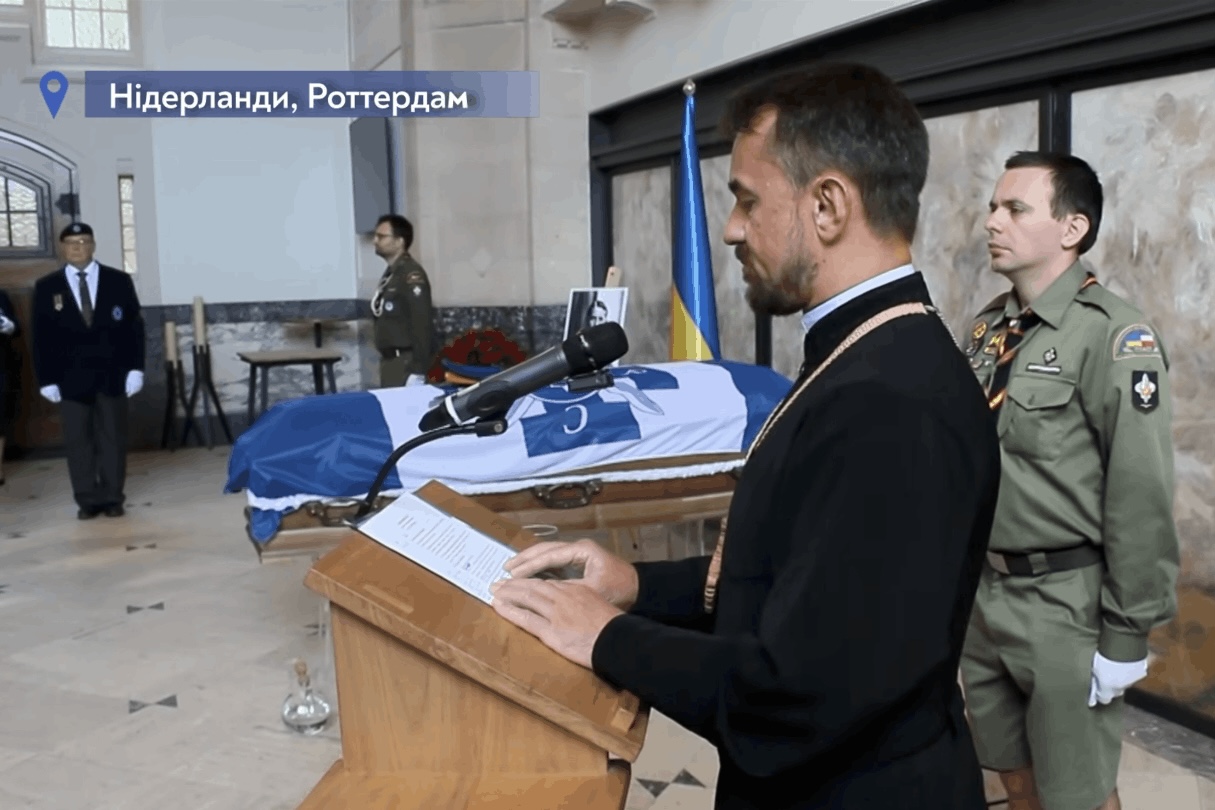
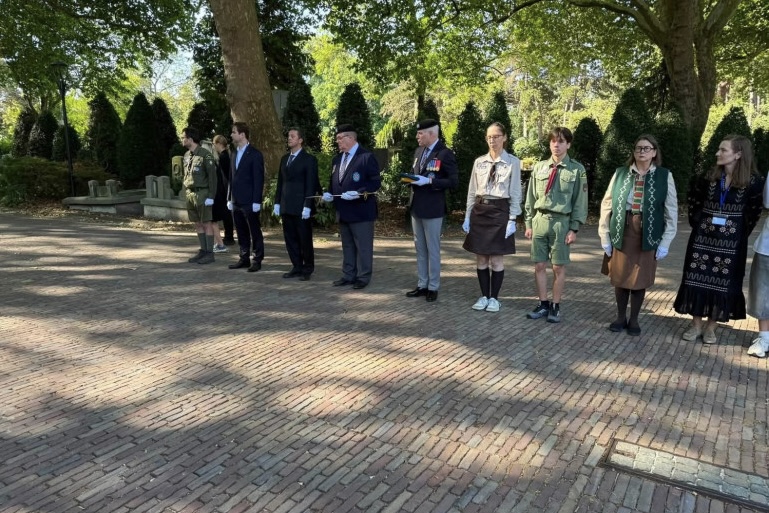
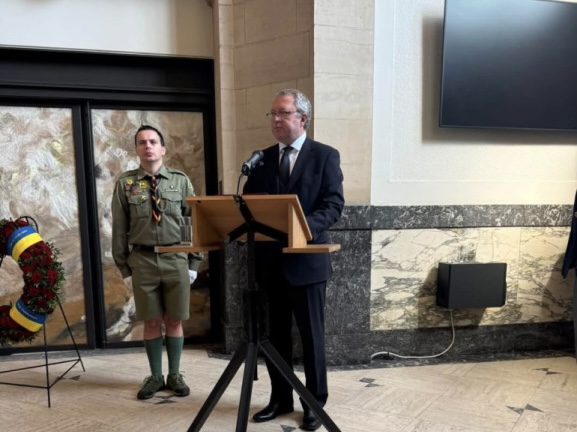
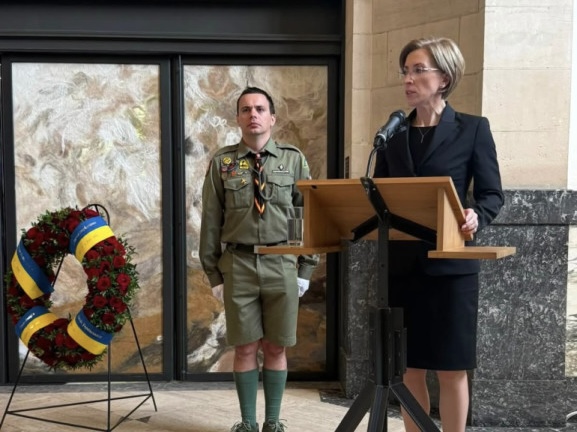
Addressing those present, Bishop Ihor emphasized that the event has national, state-building, and spiritual dimensions. Explaining the Church’s understanding of prayer for the deceased, the bishop emphasized that every person needs the prayers of the living, and that the Panakhyda offered at the colonel’s coffin is also an expression of gratitude to God for his self-sacrificing life.
“The Lord acted in a special way in the life of Yevhen Konovalets. He spared no effort, serving Ukraine selflessly and sacrificially. In the same way, the Lord acts in our contemporary history—Ukraine is resisting the Russian invasion not only thanks to political or military achievements, but also through the distinct presence of God,” the bishop noted, emphasizing that the example of the colonel, who fulfilled his earthly calling, remains a guiding light for the Ukrainian people’s struggle today.
On the same day, the remains of Yevhen Konovalets were transported to Ukraine, where they will be temporarily interred at the National Military Memorial Cemetery in the Kyiv region.
“The monument from Yevhen Konovalets’ grave will return to Ukraine and become a memorial site. Konovalets’ burial site in Rotterdam will be turned into a memorial,” noted Oleksandr Alferov, Head of the Ukrainian Institute of National Remembrance.
The farewell ceremony will take place at the Patriarchal Cathedral of the Resurrection of Christ of the Ukrainian Greek Catholic Church in Kyiv. The date and details will be announced later.
The return of Yevhen Konovalets’ remains is part of an ongoing initiative to repatriate the remains of leading figures of the Ukrainian liberation movement who were buried abroad. In May of this year, the remains of OUN leader Andriy Melnyk and his wife, Sofia Fedak-Melnyk, were returned to Ukraine.
Background
Yevhen Konovalets (June 14, 1891 — May 23, 1938) was a colonel in the Army of the Ukrainian People’s Republic, commander of the Sich Riflemen, and one of the leaders of the Ukrainian liberation movement of the 20th century. He was born in the village of Zashkiv, near Lviv.
During the Ukrainian Revolution of 1917–1921, Konovalets commanded military units of the Sich Riflemen. After the defeat of the liberation struggle, he became one of the organizers of the Ukrainian nationalist movement. In 1920, he founded the Ukrainian Military Organization (UVO), and in 1929, he became the first chairman of the Organization of Ukrainian Nationalists.
Yevhen Konovalets lived in exile, coordinating the activities of the Ukrainian liberation movement. On May 23, 1938, he was killed in Rotterdam in a terrorist attack organized by Soviet intelligence agencies. After his death, he was buried at Crooswijk Cemetery in Rotterdam.
The UGCC Department for Information