They Once Prayed in a Garden; Now They’re Building a Ukrainian Church: The Story of the UGCC Parish in San Diego
The tabernacle from their parish was transferred to the Patriarchal Cathedral in Kyiv. For years, they prayed in rented premises and, during the pandemic, in a parishioner’s garden. Now, a Ukrainian church is being built in San Diego, featuring five domes and crosses made in Ukraine. Behind this building lies the story of a community that learned to trust one another again and of a priest who found the strength to take the next step amid uncertainty. Fr. Yuriy Sas, administrator of the Parish of St. John the Baptist in the Chicago Eparchy of the Ukrainian Greek Catholic Church, spoke about this journey in an interview.
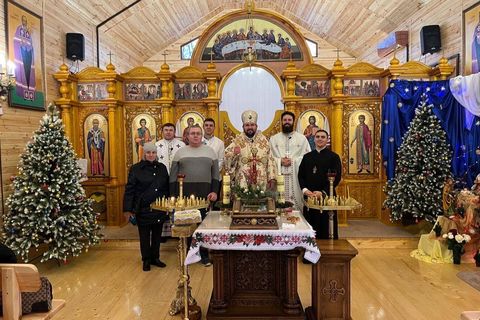
When parishioners in San Diego watch live broadcasts of services from the Patriarchal Cathedral of the Resurrection of Christ in Kyiv, they feel a special connection to it: the tabernacle, which their community acquired in 1982, was donated to the cathedral.
This story began when the community was relocating from its former church. Church items had to be packed up and stored somewhere, and the large tabernacle also needed a new home. Around that time, Bishop Venedykt Aleksiychuk mentioned that a tabernacle was needed for the Patriarchal Cathedral.
“I said, ‘Your Excellency, this is a wonderful idea, but we need to speak with the donors.’ Some of the people who had contributed to its purchase were still alive. When they heard that the tabernacle from San Diego would be placed on the altar of our Patriarchal Cathedral, creating such a spiritual bond between us, they said, ‘Certainly, no problem at all,’” recalls Fr. Yuriy.
From San Diego, the tabernacle traveled to Chicago and then to Lviv, where its gilding was restored, before finally arriving in Kyiv.
“It is very comforting to watch broadcasts from the Patriarchal Cathedral and feel that we share this unity with our Patriarchal Church,” says the priest.
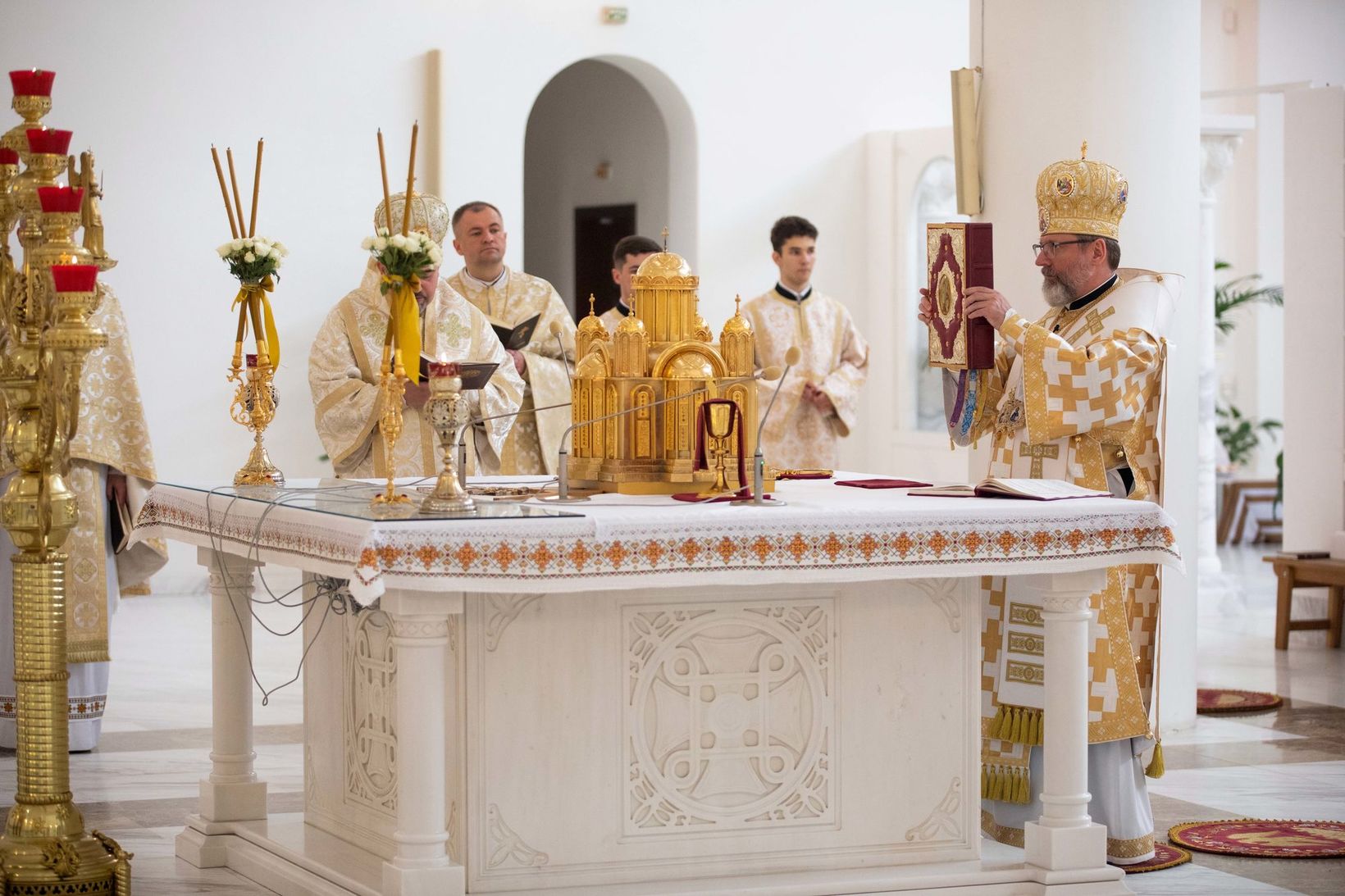
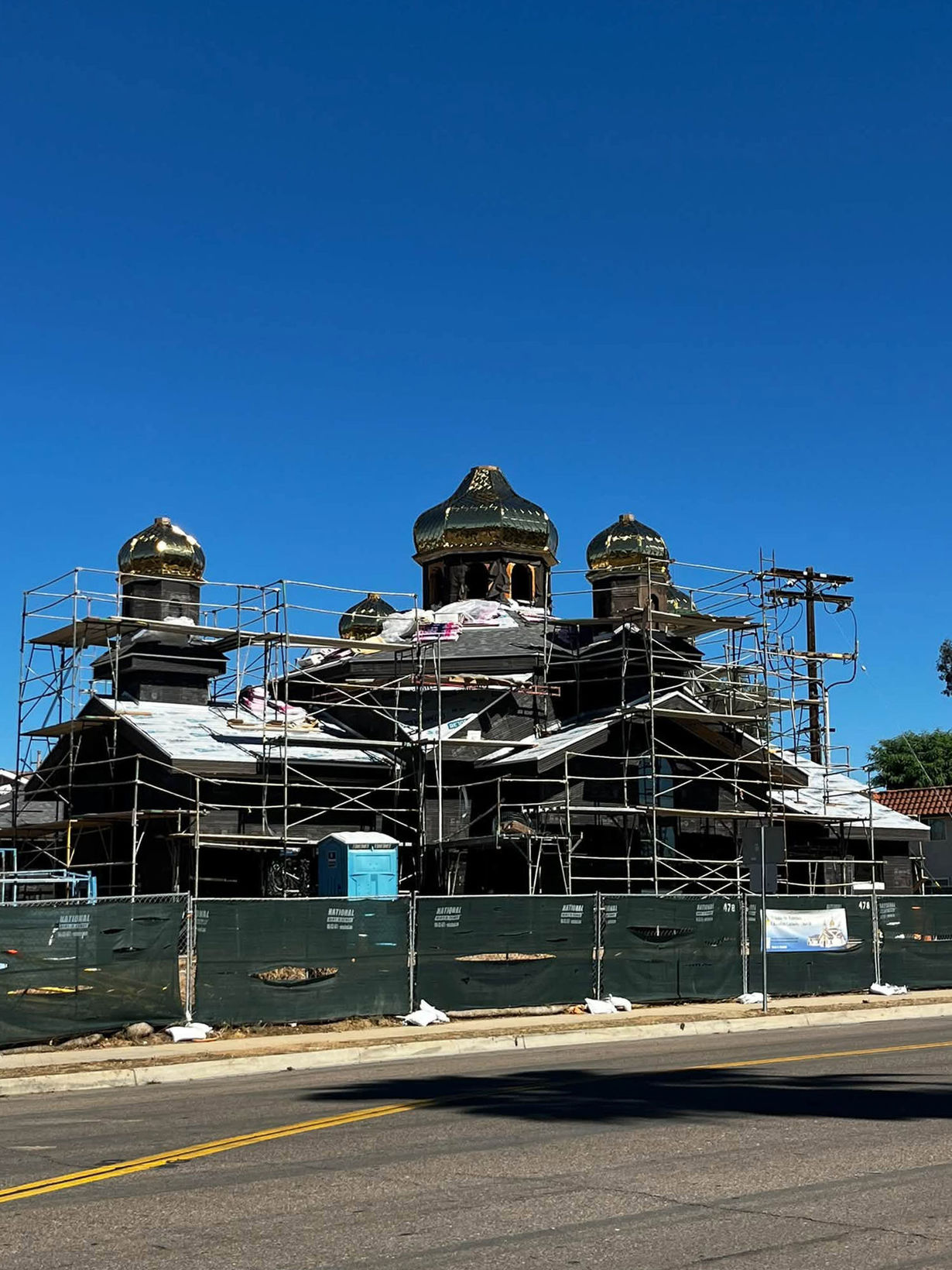
Now, church furnishings are making their way in the opposite direction—from Ukraine to a parish on the Pacific coast. An altar for the new church has already been crafted in Lviv, and five domes with crosses have arrived in California after crossing the ocean.
“We have a wonderful parish for you—one with no church, no people, no money, and no rectory, but with the opportunity to build a completely new temple of God.”
To Heal the Community First
Fr. Yuriy is originally from the village of Pavlivka, near Ivano-Frankivsk. His grandmother took him to church. At the age of eight, he began serving at the altar, and by the age of twelve, he was already serving as a cantor in the village.
“Anyone from Ukraine understands what it means to serve as a cantor at the age of twelve. That was my first ministry: I took part in joyful occasions, such as weddings and baptisms, but I also had to attend funerals. That was my first little seminary, my first formation,” he says.
After completing his studies and being ordained, he served in the village of Radcha. In 2016, he moved to the United States with his wife and two children after the family won a green card through the U.S. immigration lottery. Metropolitan Volodymyr Viytyshyn blessed their decision, while leaving open the possibility of their return.
“I remember him saying, ‘Son, I’m letting you go, but give it a year. If it doesn’t work out, you’ll always have a place to return to.’ I had made no prior arrangements with the bishops of our Church in America. I arrived simply as an ordinary person,” recalls Fr. Yuriy.
His first assignment was in North Dakota, serving communities of descendants of Ukrainian immigrants, where English had already become the predominant language. He had to learn it, as he had studied German at school and in the seminary.
“I thought America was the same everywhere, whether you were in New York, Chicago, or Los Angeles. But I was sent to a parish where people spoke only English. That was my first challenge, which, thank God, I overcame,” he says.
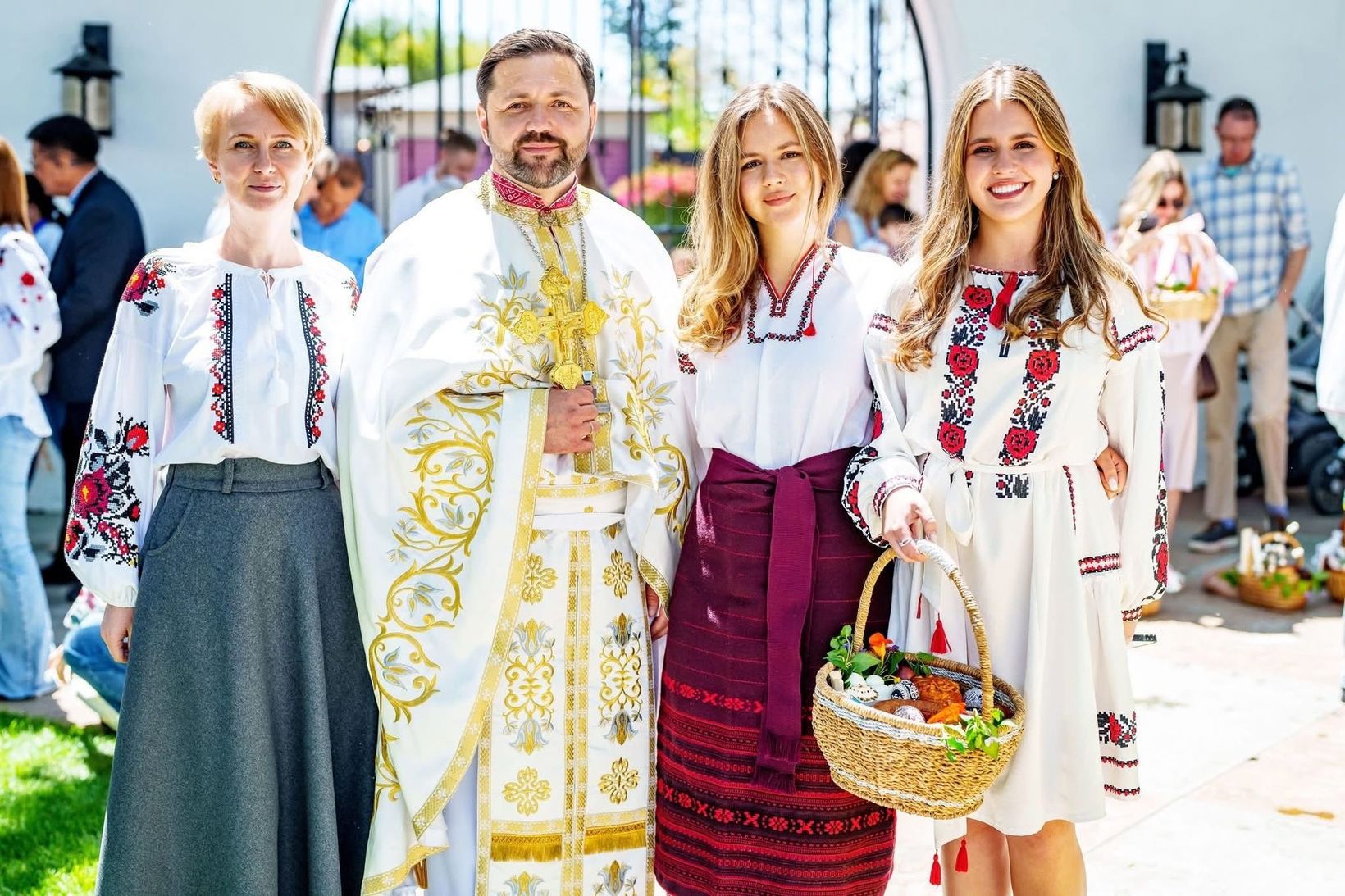
Later, an opportunity arose to move to Denver. The mountains of Colorado reminded him of the Carpathians, and the family began preparing for their new home. But about two weeks before the planned move, another call came.
“They said, ‘We have another very good parish for you. It has no church, no people, no money, and no rectory, but it offers the opportunity to build a completely new temple of God.’ Somehow, the idea touched my heart. We had been planning to move to what I called the American Carpathians, but then the opportunity arose to go to California. I said, ‘Why not?’ My family supported me, and we came here.”
What awaited them was a community with a complicated history of relocations, financial difficulties, and the loss of its own church. A plot of land for a new church had already been purchased, but construction was still a long way off.
“When we arrived, they told me, ‘Father, we have enough money to keep the parish going for only two months.’ I told my wife, ‘Don’t unpack your bags just yet; we probably won’t be here long,’” the priest recalls.
But the first task was to rebuild relationships. Parishioners held differing views on the sale of their former church and the future of the community.
“I came to a wounded parish. People had been hurt, and the community was somewhat divided. Some supported the idea of building a new church, while others asked, ‘Why don’t we stay in the old one? Perhaps it just needs renovating?’ There were different opinions. My first task was to heal those wounds, reconcile people, and mend relationships,” says Fr. Yuriy.
Liturgy in the Garden
For some parishioners, moving to a different place of worship meant traveling dozens of additional kilometers. This was particularly difficult for older members of the community.
“One elderly, highly respected parishioner said, ‘Father, I won’t be able to come anymore. I knew how to get to the old church, but I won’t be able to find my way to the new one.’ She didn’t know how to use a navigation app. It was heartbreaking. We arranged for younger parishioners to pick up the older ones so that we could keep the community together,” the priest recalls.
The parish found a temporary home in the chapel of a Roman Catholic monastery, and life gradually began to settle down. Then the pandemic struck, and the premises were closed.
“It was a real blow because, after two years, the parish had only just begun to get back on its feet. We were rebuilding our spiritual life, and our financial situation had improved somewhat. Then I had to celebrate services from my apartment. I remember that period before Easter. Neighbors would sometimes ask me, ‘Yuriy, did you work from home today?’” recalls Fr. Yuriy.
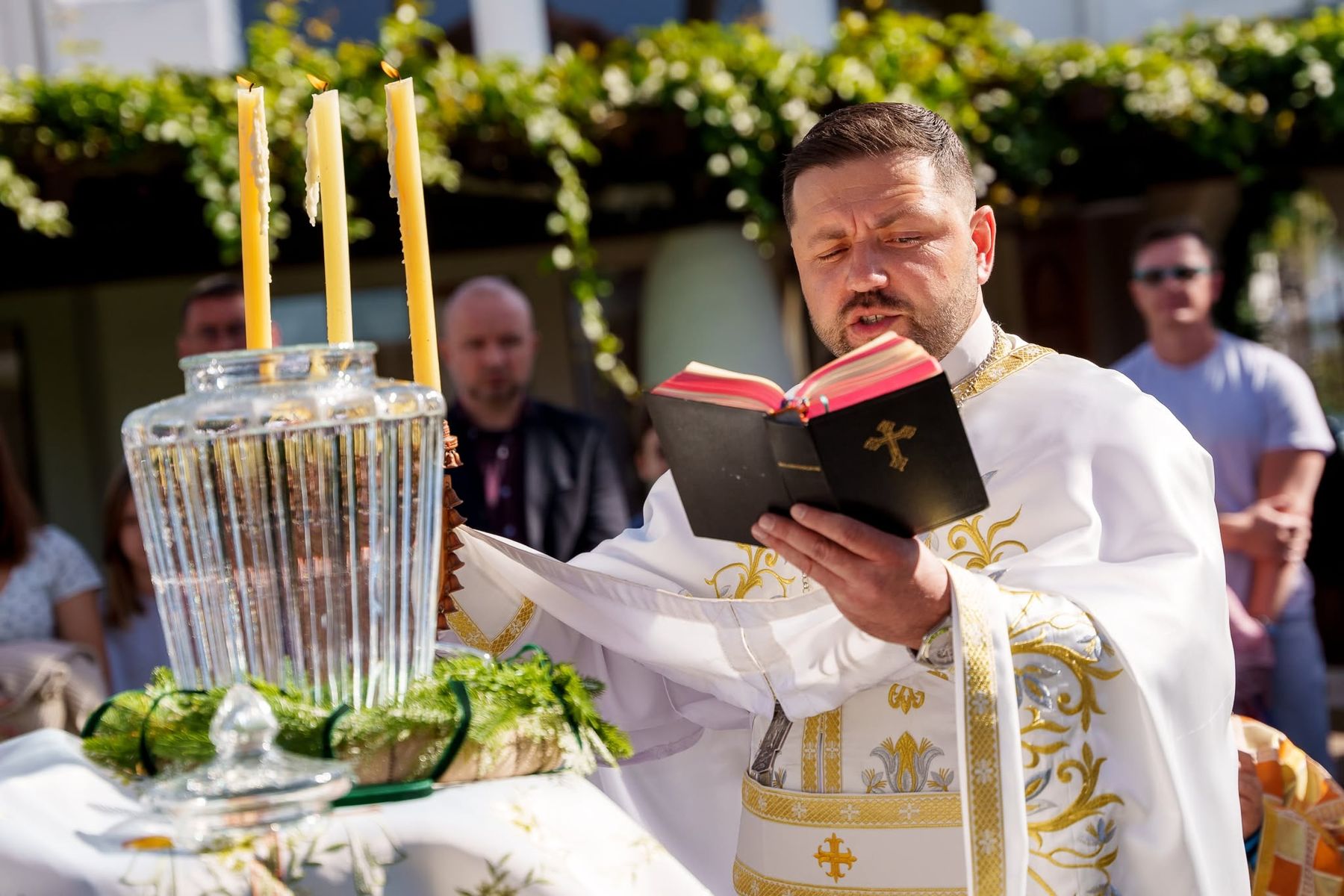
The priests’ “work from home” continued for several months. Yet the community needed a place to gather again for communal prayer. That place turned out to be the spacious garden of parishioner Bohdan Knyahynitsky.
“We had 50 to 60 people attending the Divine Liturgies. They wore masks and tried to comply with the restrictions. There was no parking lot, so people had to drive into the garden and park their cars among the trees. I always asked everyone to avoid arguments. And, thank God, we got through that difficult period,” the priest says.
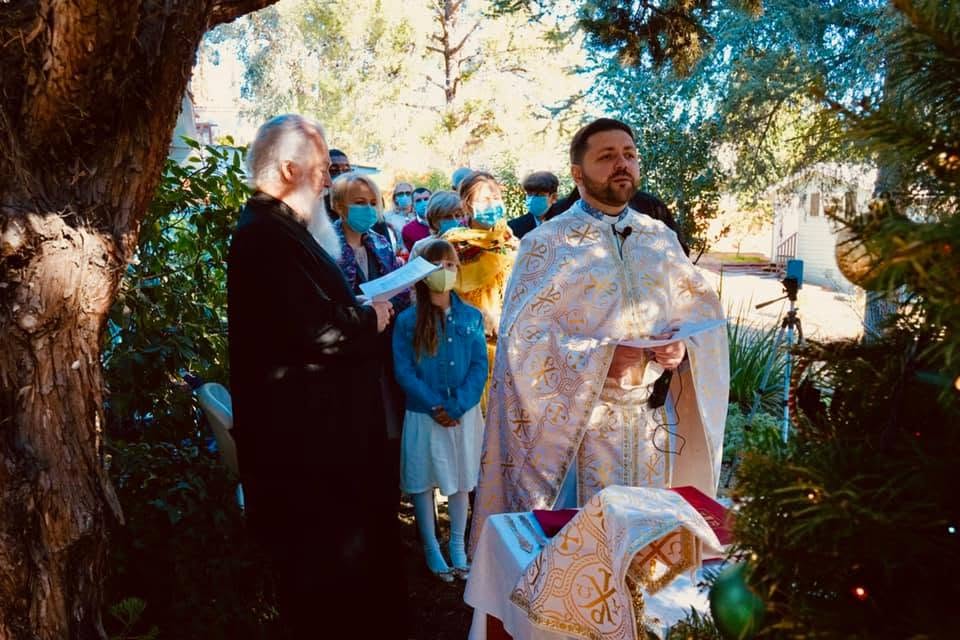
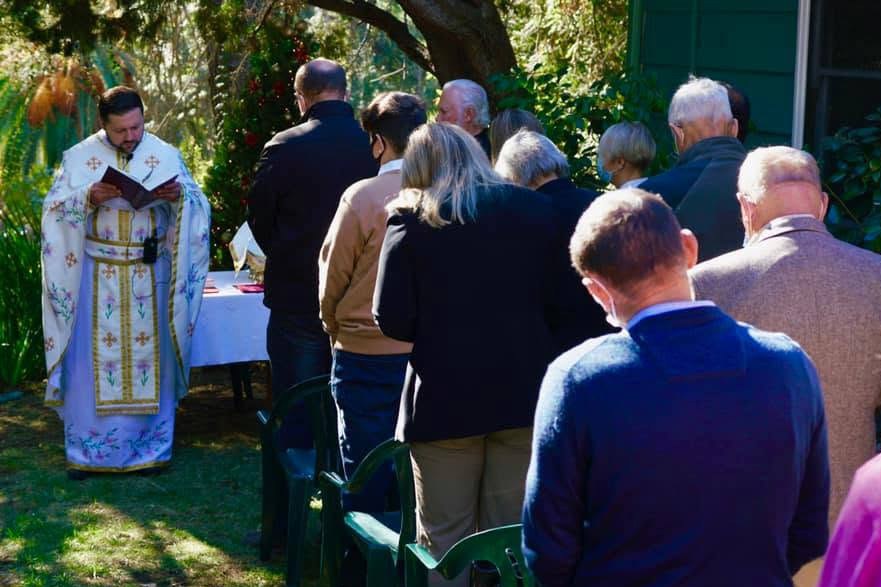
Services were also celebrated in other unusual places.
“I had to celebrate wedding ceremonies on the ocean shore because we had no church. I baptized children in parks. It reminded me of the time when our Church was underground,” Fr. Yuriy recalls.
The community continued to thrive beyond Sunday services. On Christmas Eve, parishioners found a suitable venue, prepared meals together, and organized a vertep, a traditional Ukrainian Christmas performance presented by the children. Ukrainians belonging to other Christian denominations joined them as well.
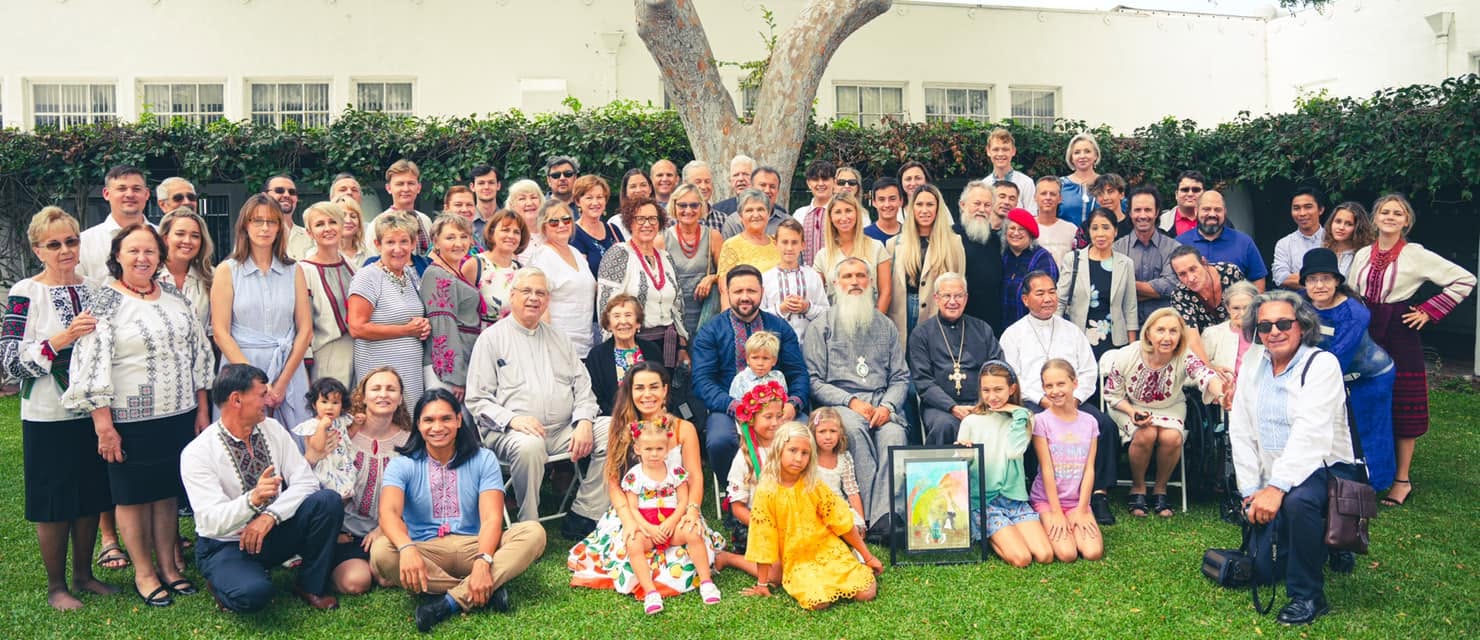
“We’re all migrants here, so to speak. In Ukraine, you have your family, but here, we are one family because the rest of our relatives have stayed in Ukraine. That’s why we came up with the idea of celebrating Christmas Eve together—to foster a sense of family. People are looking for opportunities to speak Ukrainian, talk about the situation in Ukraine, and simply feel that they are not alone. But I’m very glad that, above all, people are seeking God. They bring their experiences, their fears, and their prayers to the church.”
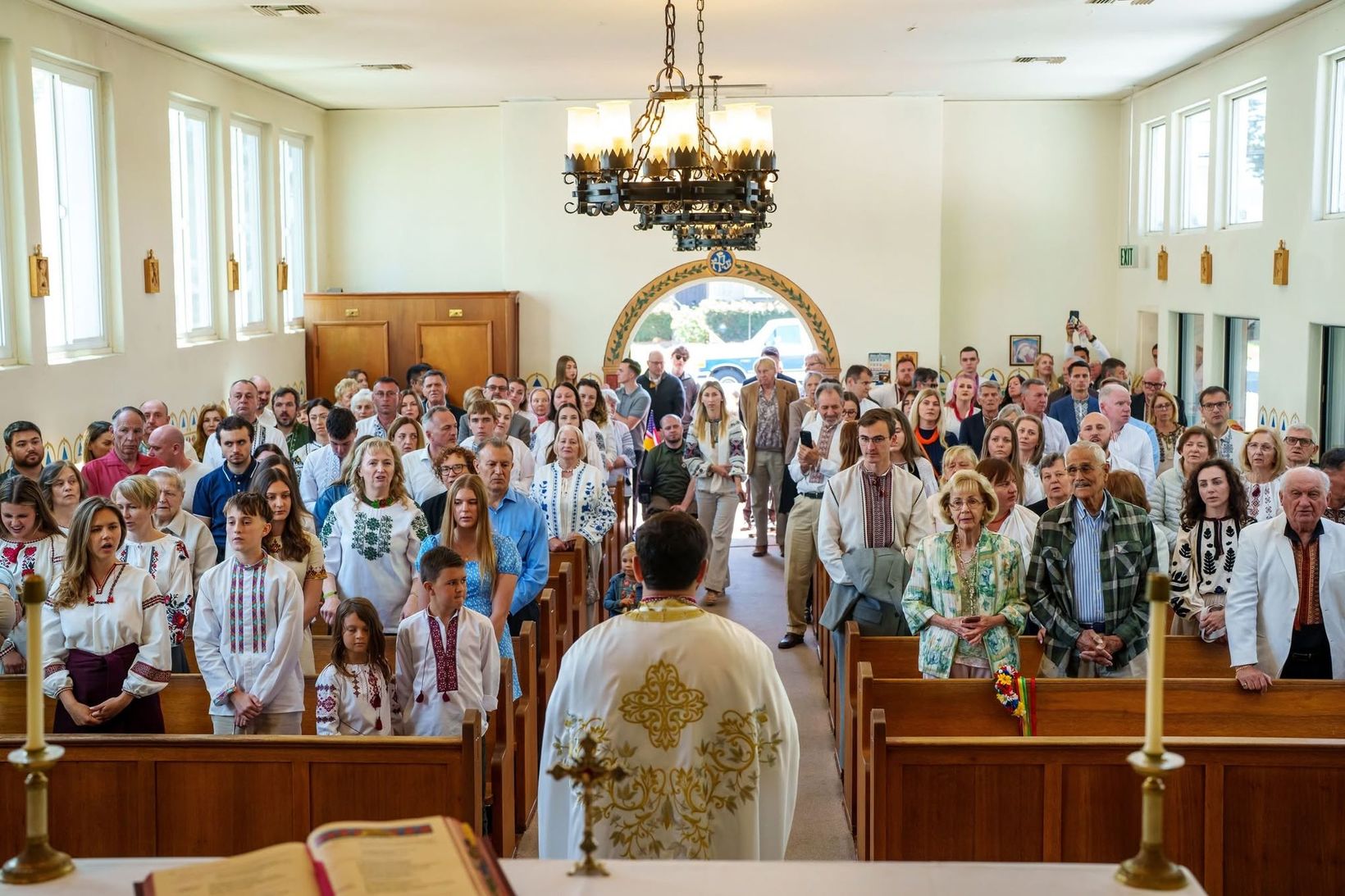
After the pandemic, the community returned to the chapel. When another move became necessary, the Roman Catholic parish of St. Vincent opened its doors to them. There, the Ukrainians continue to pray while awaiting the completion of their own church.
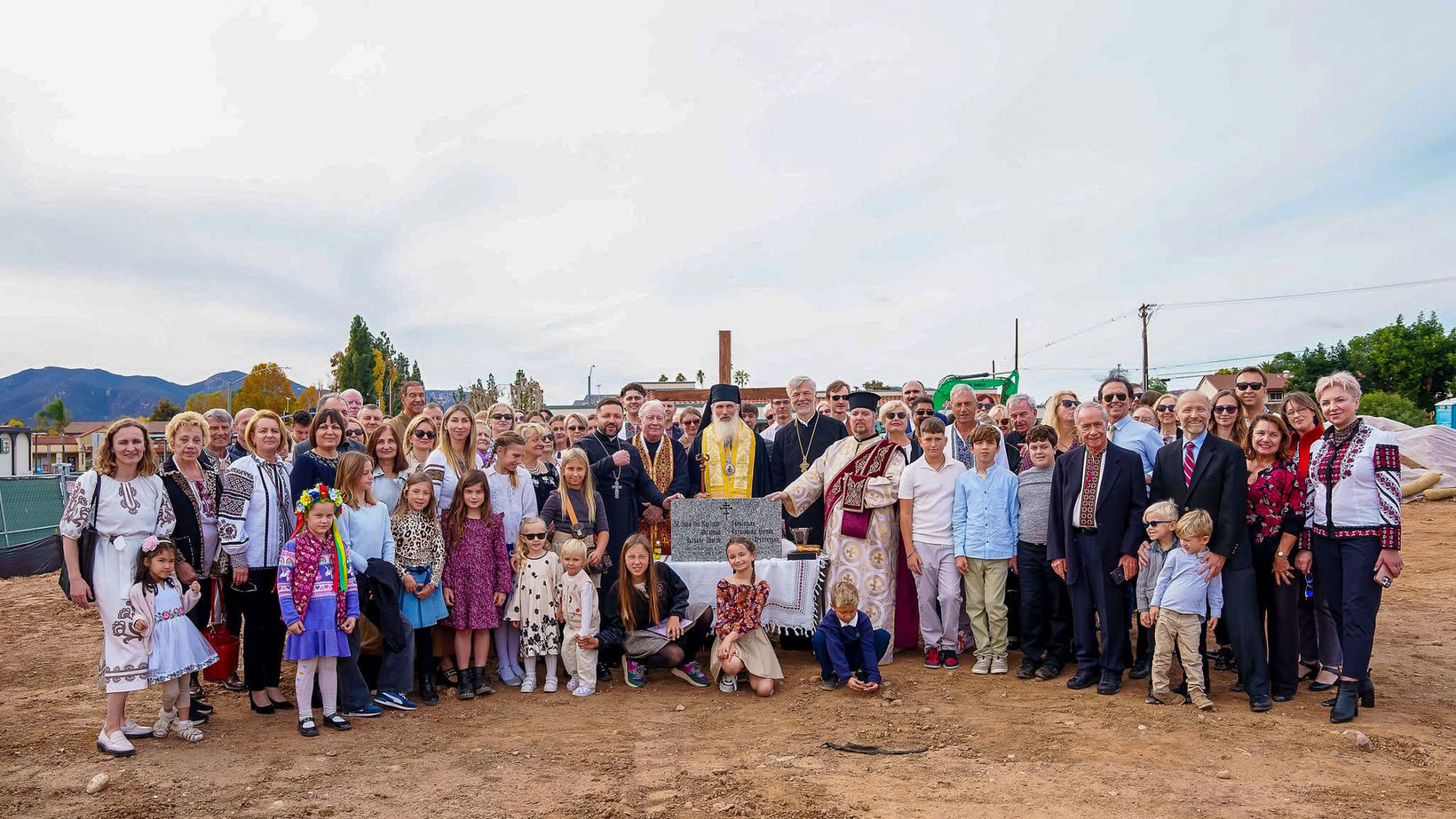
“God, if You’re joking, that’s fine. But if You have plans for a church to be built here someday, please give us some kind of sign.”
A Field That Had to Be Mowed for Years
Grass had been growing on the site of the future church for years. Fr. Yuriy and the parishioners mowed it regularly, waiting for the day when construction could finally begin.
Obtaining the necessary permits took years. Then the pandemic brought the project to a standstill. Next came the search for a developer and arrangements for a loan. For those who saw the same empty field year after year, progress was almost imperceptible.
“You tell people, ‘Everything will be fine; we’ll build it,’ but they see nothing happening. The field looks exactly the same, with only Fr. Yuriy and his parishioners mowing the grass. Sometimes I would look up at the sky and say, ‘God, if You’re joking, that’s fine. But if You have plans for a church to be built here someday, please give us some kind of sign.’ And God always gave us a sign: a donor would appear, or someone would come up with a good idea for what we could do,” the priest recalls.
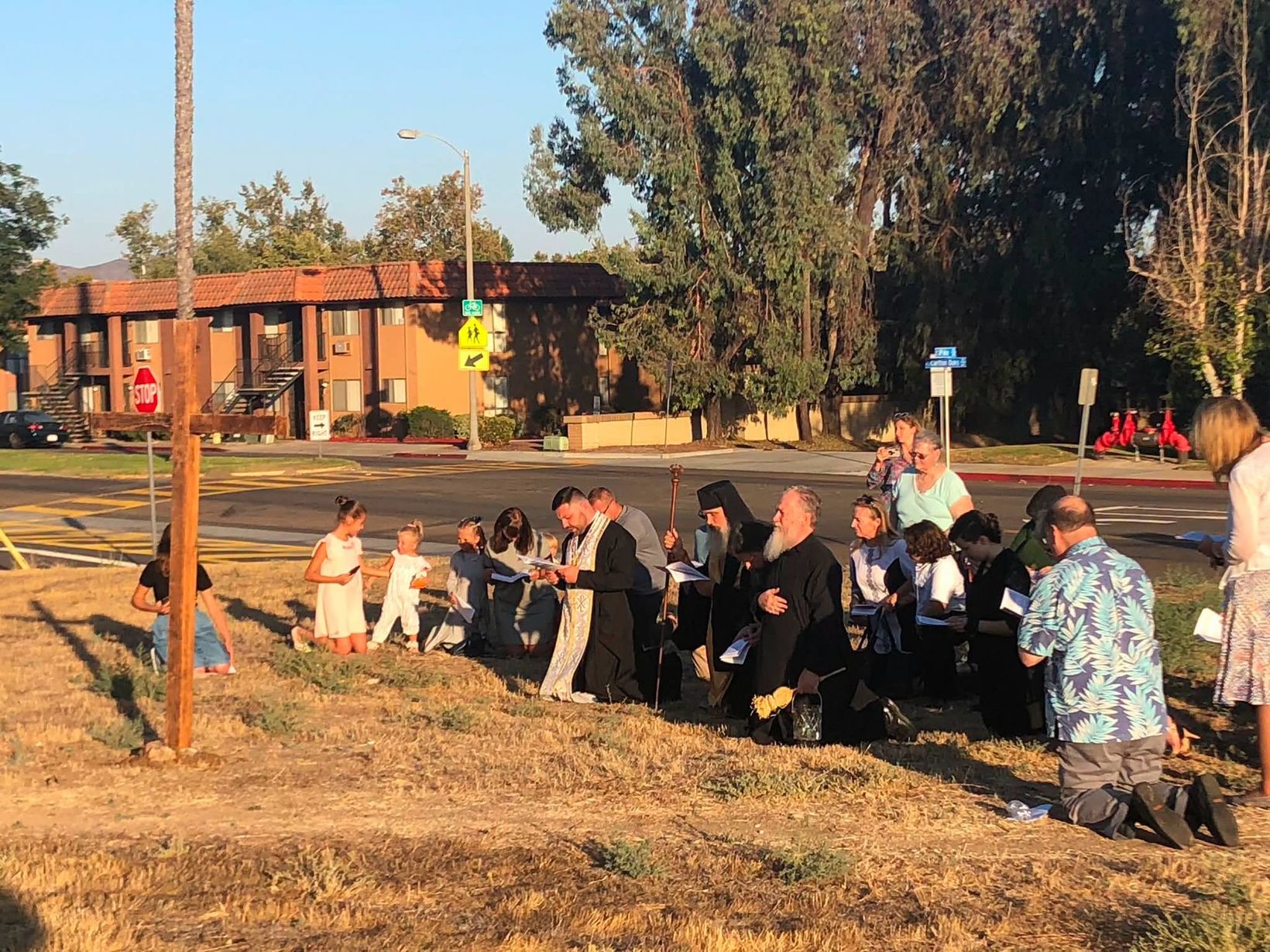
His visits to local authorities also left a lasting impression, particularly because of the conversations he had there.
“When I went to the town hall in the city where we’re building the church and asked for a little help in speeding things up, I was told, ‘Father, I’m sorry, but it’s easier to build a gas station in America than a church.’”
One decisive moment came at a parish meeting after the community had weathered these difficulties. The parishioners had to decide whether to move forward with construction.
“We were deciding whether to keep dreaming of a new church. When the people voted an almost unanimous ‘yes,’ I felt that God’s grace and the work of the Holy Spirit were present in our parish. I had never experienced anything like that before,” says Fr. Yuriy.
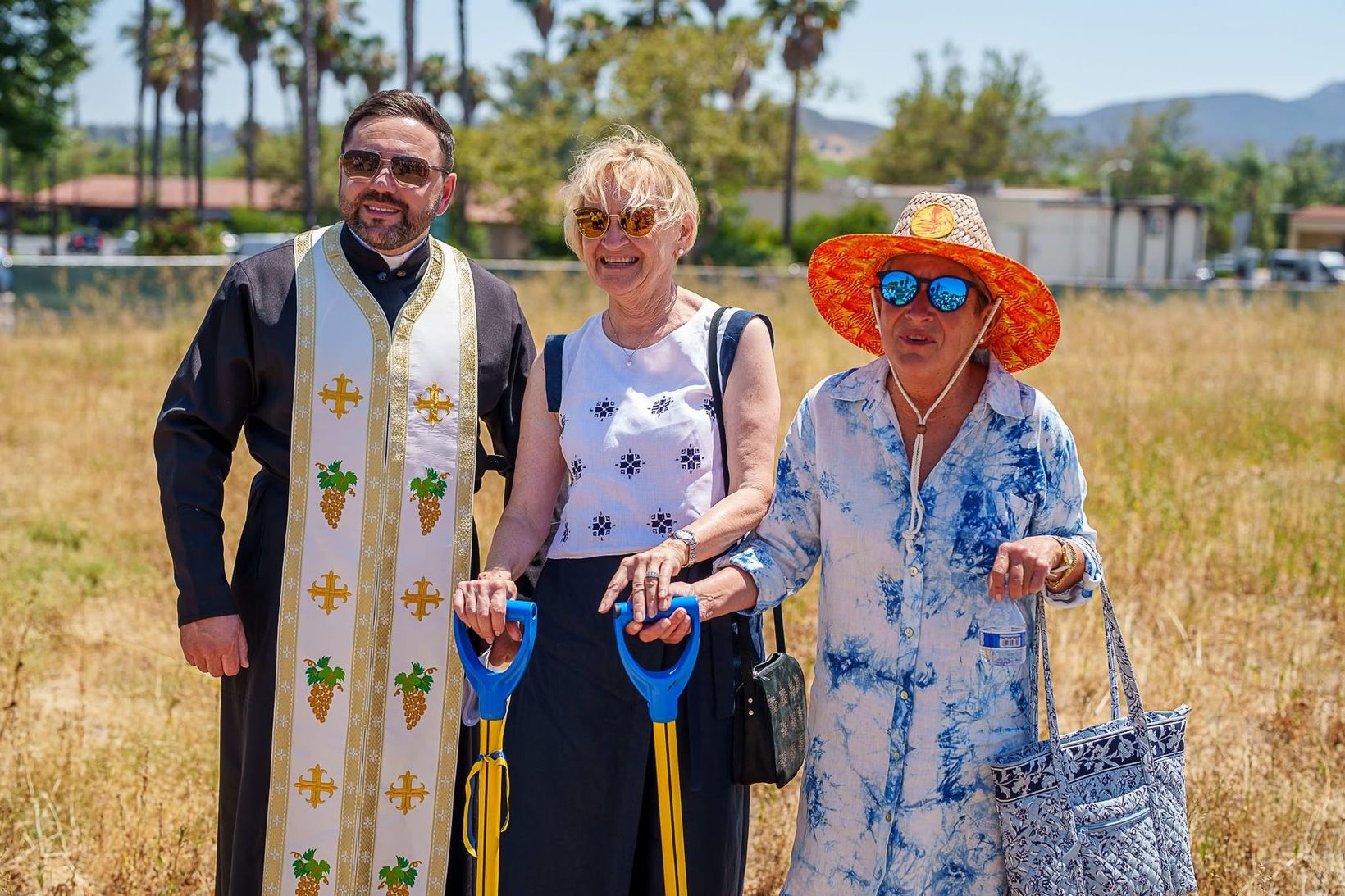
The second milestone was the start of construction, when the priests picked up shovels and symbolically broke ground at the site. What had been discussed for years was finally taking shape.
“It was a deeply moving moment. I felt an extraordinary sense of grace and hope that everything would work out. But before we could build God’s temple, we first had to build God’s Church within people—to build a community of God.”
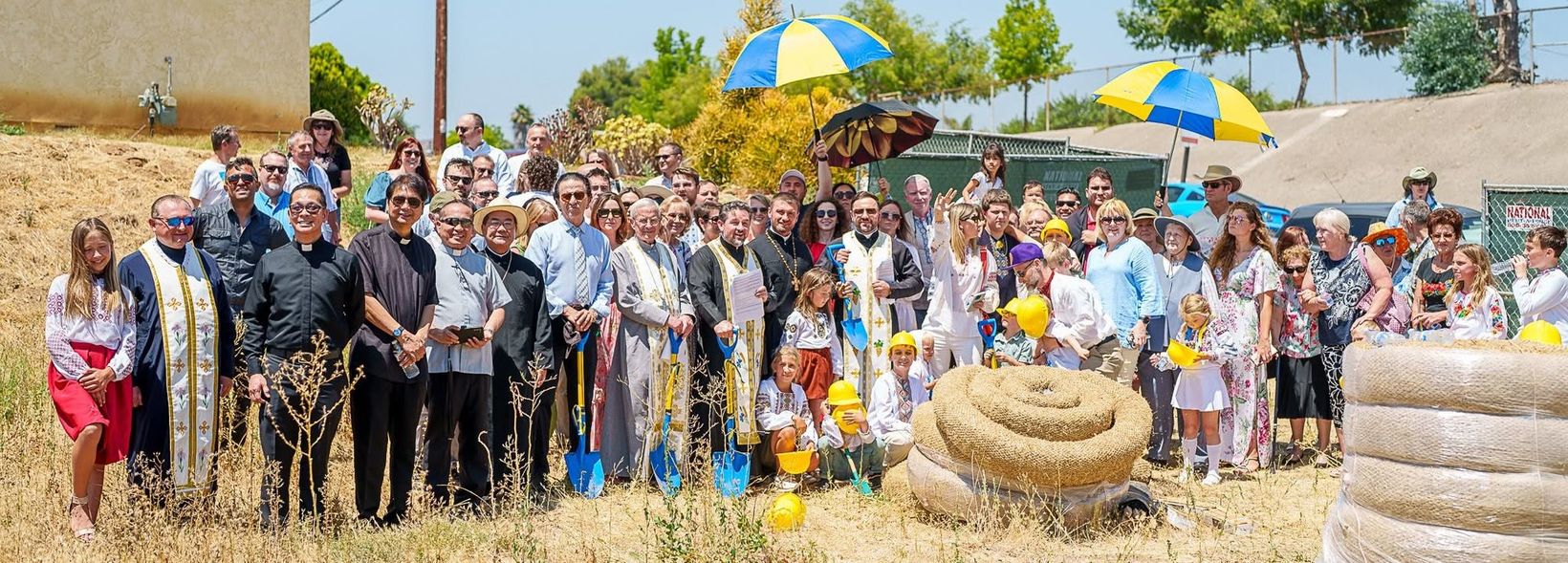
“The central dome was donated by the widow of Bohdan—the very same parishioner in whose garden the congregation prayed during the pandemic.”
Five Domes, Five Stories
The Ukrainian church in Lourdes served as an architectural inspiration for the community. According to Fr. Yuriy, the idea was originally proposed by Bishop Michael Wiwchar. The design had to be adapted to local requirements, particularly by reducing the building’s height.
The new church is designed to accommodate approximately 100 people. A parish hall is also being built nearby, providing a space for the community to gather after services and hold other events.
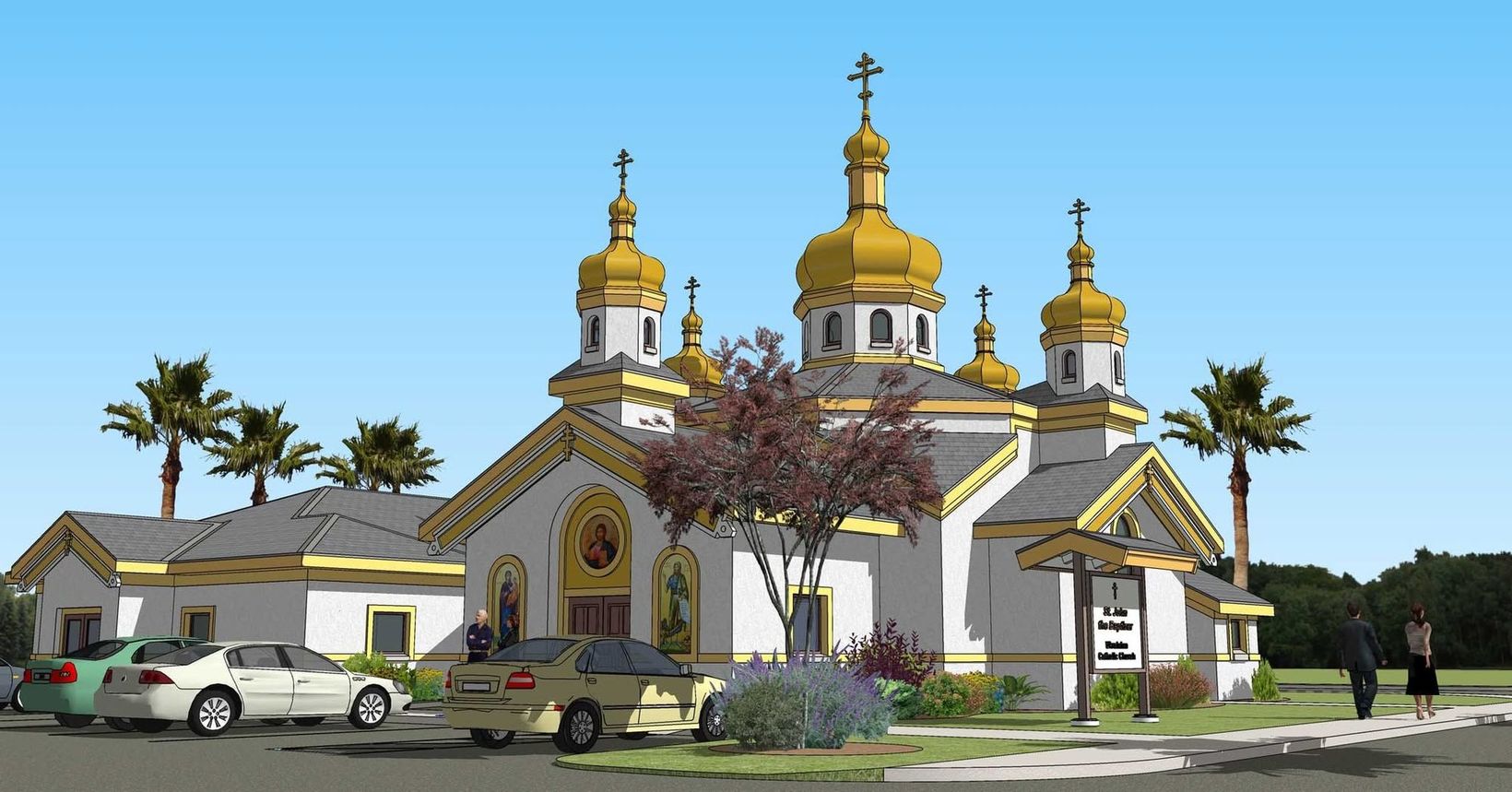
The domes and crosses presented a separate challenge, as their construction was not included in the contract with the building company.
“The developer looked at our design for the domes and crosses and said, ‘We probably won’t be able to make anything like this in America.’ So we started looking for alternatives. One option, made of something other than metal, cost $150,000. Another, made of metal that would need to be repainted every five years, cost $250,000. I thought to myself, ‘Why not make them in Ukraine?’” says Fr. Yuriy.
His classmate, Fr. Yuriy Korpanyuk, helped by finding craftsmen in the Kosiv region. The project required coordination of technical specifications, structural loads, transportation, and customs clearance. Eventually, five domes and five crosses arrived at the Port of Long Beach before being transported to San Diego.
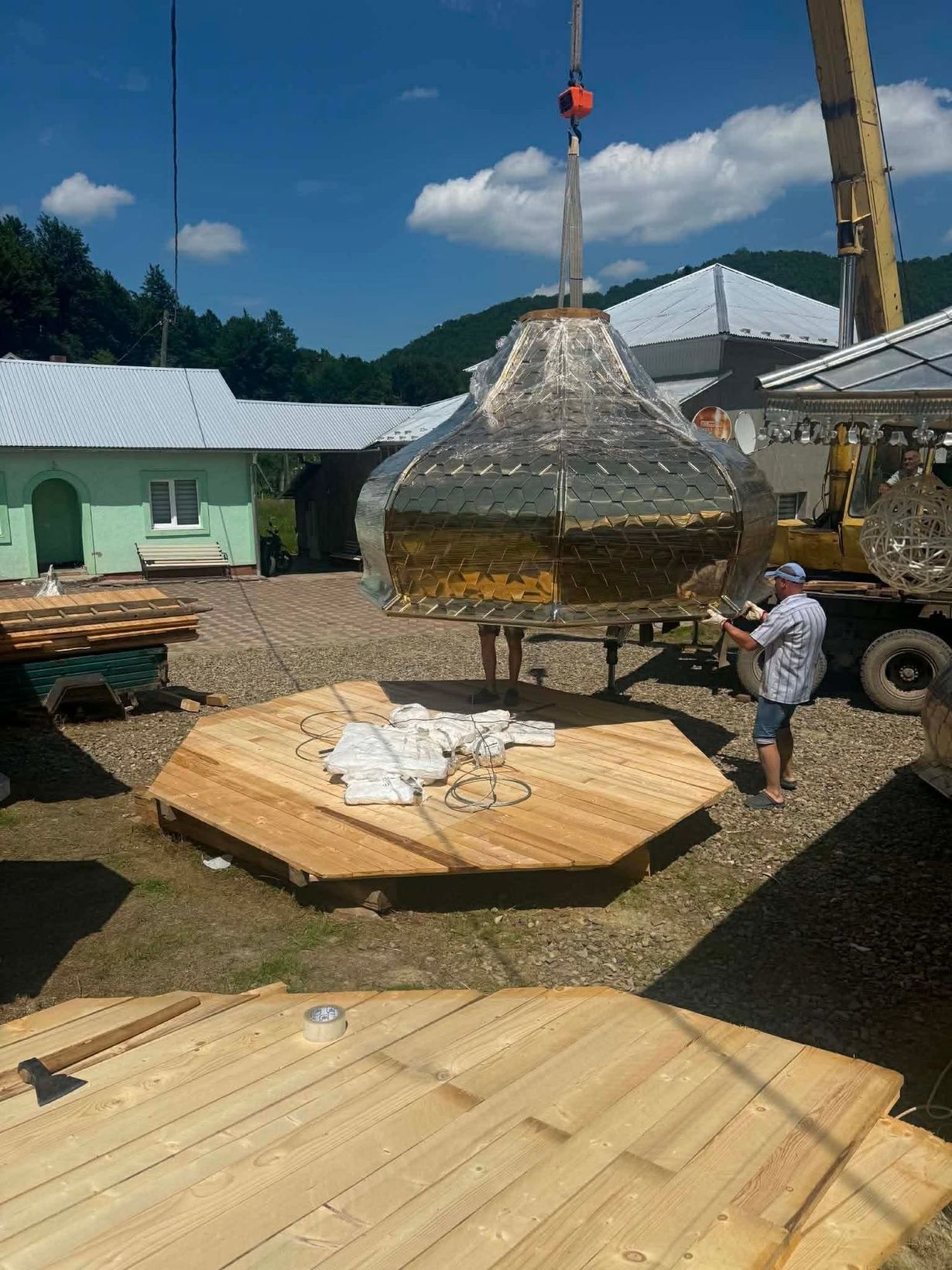
The domes and crosses were funded by donations from families.
“I asked, ‘Who would like to make a donation toward a dome or purchase a cross in memory of a deceased loved one or for another intention?’ People became interested. Every dome and every cross has its own story. Inscriptions indicate which family donated each one and for what intention,” explains the priest.
The central dome was donated by the widow of Bohdan—the very same parishioner in whose garden the congregation had prayed during the pandemic.
“I sometimes joke that Bohdan bought the central dome. He was a good parishioner of ours who, unfortunately, passed away, and his wife donated the dome in his memory.”
The funds for another dome were raised by the faithful of the mission in Orange County. Fr. Yuriy travels there once a month to celebrate the Divine Liturgy. That community, too, began without its own church, holding services in a school classroom.
“Ukrainians are building a church in America. A Chaldean contractor is working for them, and Mexicans are working for him. This is truly the Catholic Church.”
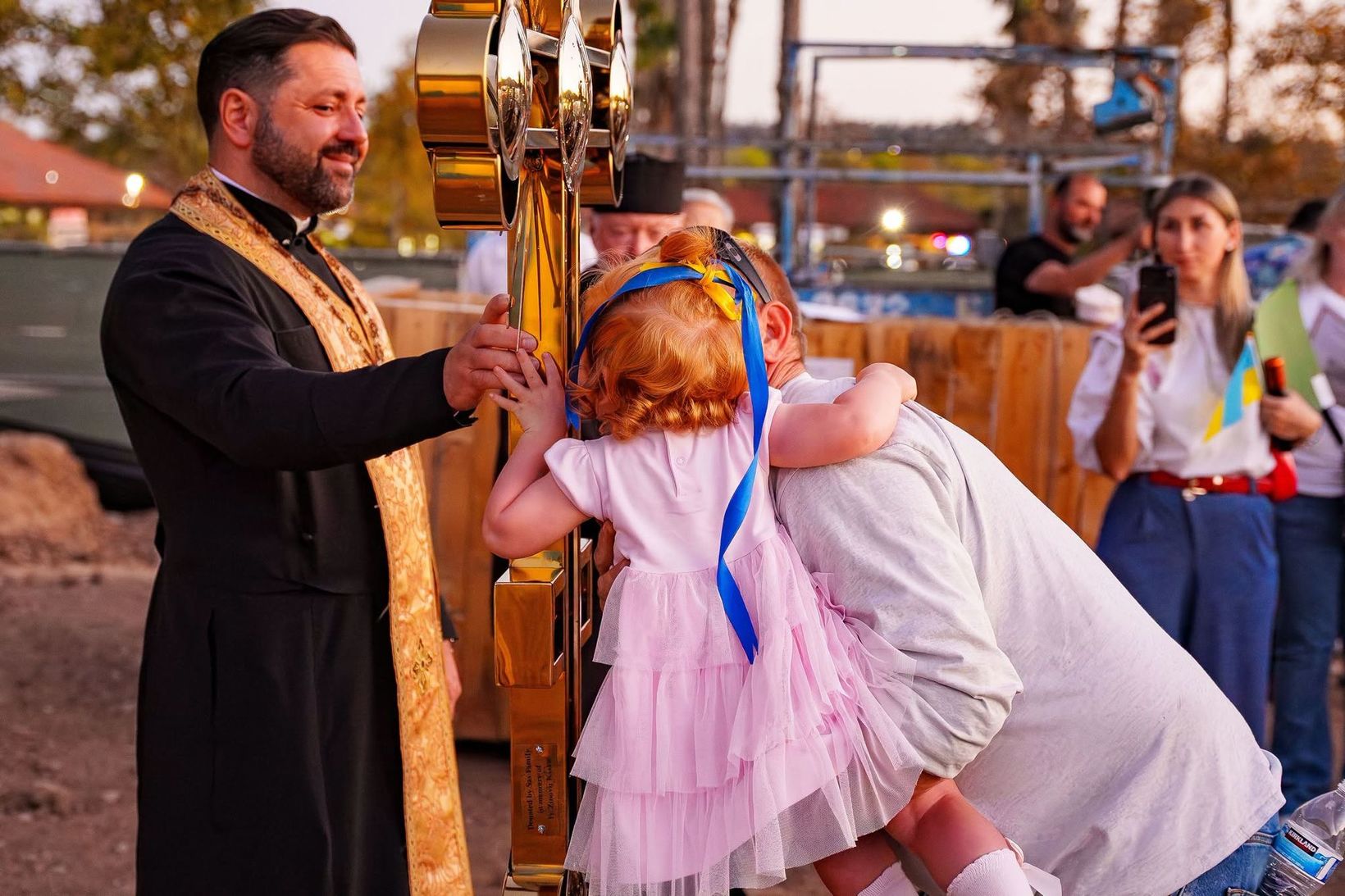
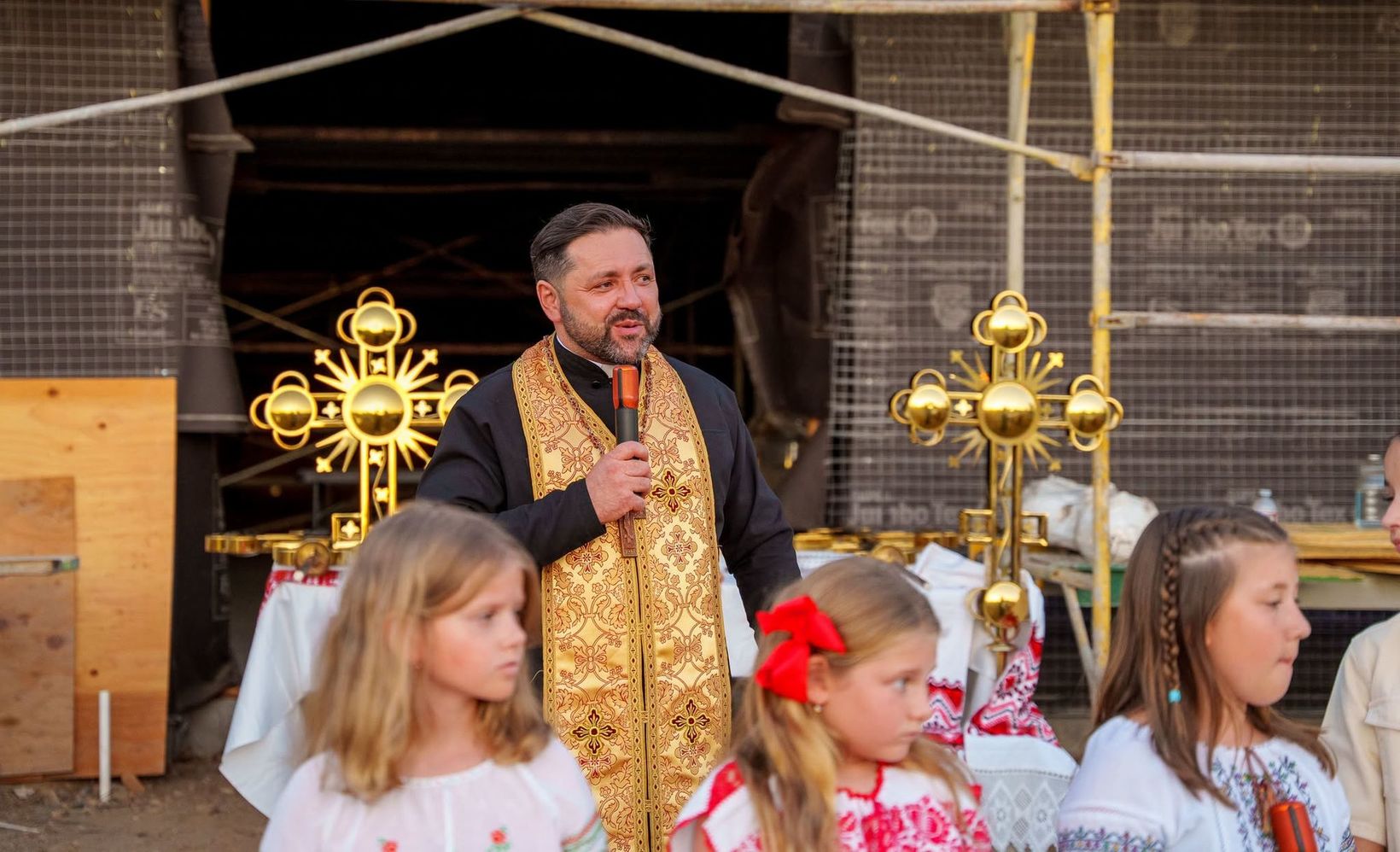
The blessing of the crosses that had arrived from Ukraine was an especially emotional moment for the community. After years of waiting, parishioners could finally see what would soon crown their church.
“I promised people that everything would work out, but they wanted to see what I was promising them. So when the crosses were blessed, the emotions were incredible, especially among the older generation. This whole process had dragged on for eight years,” says Fr. Yuriy.
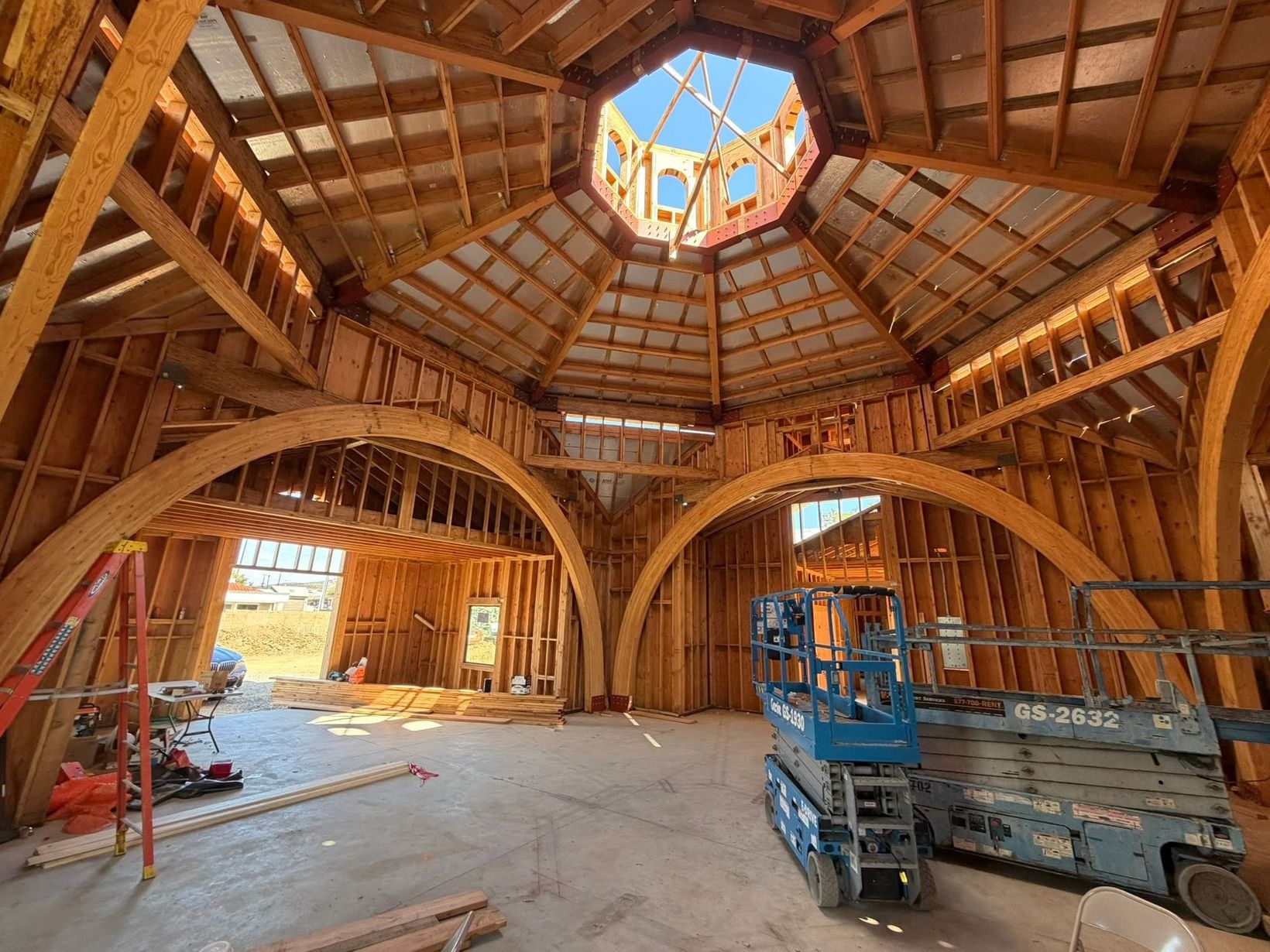
To continue construction, the parish took out a $1.5 million loan with the blessing of Bishop Venedykt Aleksiychuk. It also received two grants of $50,000 each from Catholic organizations. Parishioners agreed to carry out part of the work themselves. At the time of the interview, they hoped to complete construction by the end of 2026 or early 2027.
Fr. Yuriy sees the construction project itself as a powerful symbol of how people from different backgrounds can come together.
“During the blessing of the crosses, I noticed something: Ukrainians are building a church in America; a Chaldean contractor is working for them, and Mexicans are working for him. This is truly the Catholic Church, the Universal Church.”
Ukraine Is Always Present—in Prayer and Everyday Actions
Father Yuriy’s ministry extends beyond the Ukrainian parish. He serves as a chaplain at a hospital and a hospice and assists the Roman Catholic community. Every day, he meets dozens of people.
When patients hear his accent, they ask where he is from. His answer—“From Ukraine”—often sparks a conversation about the war.
“Every day I visit 25–40 patients and meet new people. They ask, ‘Father, where are you from?’ I say, ‘From Ukraine.’ And very often I hear: ‘I pray for peace in Ukraine. I’m very sorry this has happened. I’m sorry our government isn’t providing enough support.’ This gives me hope: you feel that even though you’re far away, you’re not alone,” the priest says.
Father Yuriy’s mornings begin with prayer and the Ukrainian news. It is important to him to know what is happening back home so that he can support his loved ones and tell the people he meets throughout the day about Ukraine.
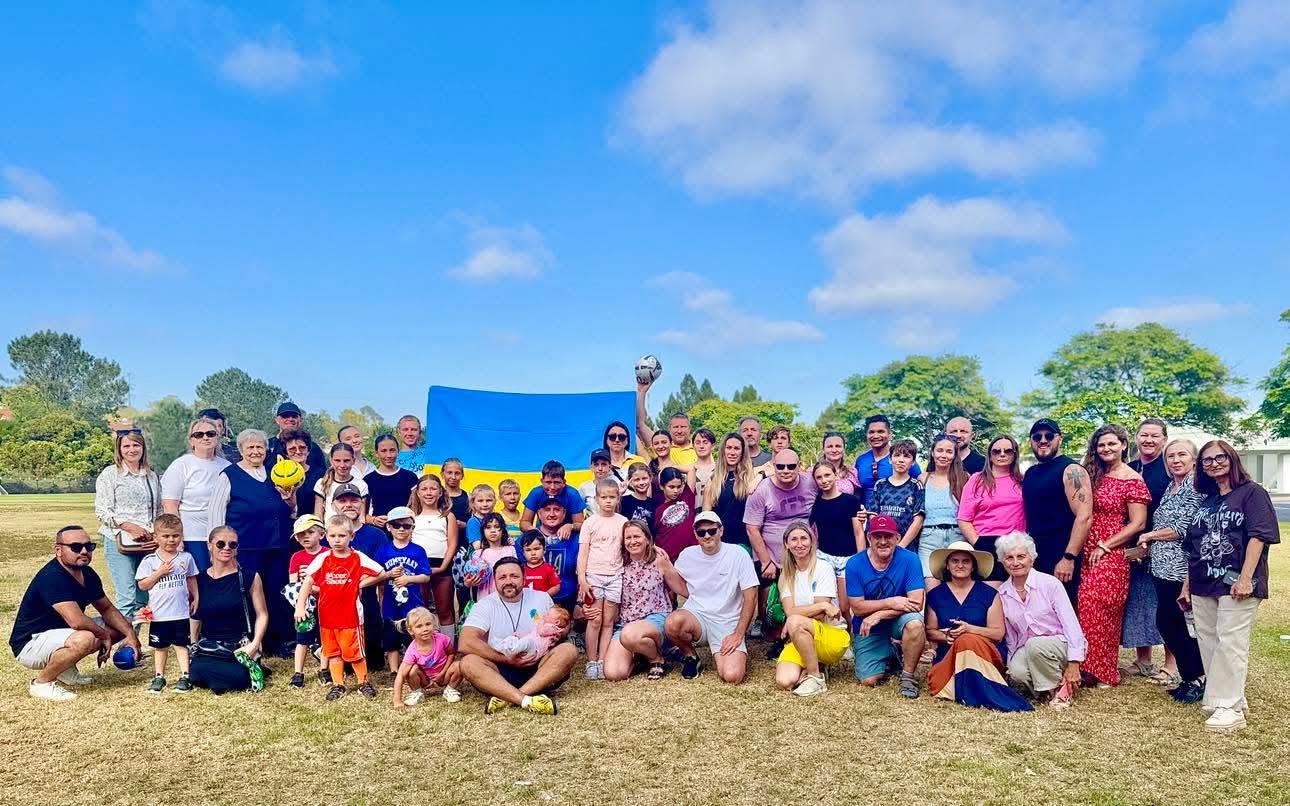
In San Diego, the Ukrainian community organizes campaigns to support Ukraine and collects aid for the military and people back home. Church communities, civic organizations, and volunteers all join these efforts.
“We have a special mission—to tell Americans the truth about what is happening. We constantly pray for a just peace in Ukraine, but we are also working to bring about that peace. We Ukrainians may be very different and hold different views, but when we face hardship, we know how to support one another and do good deeds,” he emphasizes.
“You Have This Day”
When asked what the construction project has taught him, Fr. Yuriy replies that it has taught him to believe in and trust in the Lord God.
“Sometimes, when I was mowing that grass, I didn’t even believe it myself. But then, at some point, I said to myself: ‘Man, you have this day. Do what you can do today. Ask God for help and grace.’ And so, as the Americans say, step by step—one step at a time.”
Prayer and the daily Liturgy give him strength. Even when he cannot celebrate the Liturgy for the Ukrainian community every day, he celebrates it for Roman Catholics.
“The daily Liturgy is something incredible. For me, it’s a source of inspiration, faith, and strength,” he says.
And when things get tough, Fr. Yuriy gets in his car and drives to the construction site.
“You walk among the scaffolding, among the building materials—and it’s very calming. You feel God’s presence in your priestly life.”
He envisions the future church as a place open to people of various nationalities. He plans to celebrate services in Ukrainian and English and also dreams of celebrating the Liturgy in Spanish.
“I want this to be a Ukrainian church for everyone, where people of different nationalities can come and, above all, find the Lord God and experience spiritual warmth and peace. That’s how I see the parish—an international one with a Ukrainian foundation,” says Fr. Yuriy.
For the community that once gathered to pray in a garden, having their own church will also mean being able to finally invite everyone home.
The UGCC Department for InformationPhotos of St. John the Baptist Parish in San Diego