“For Us, a Priest Was Someone Who Came at Night”: His Beatitude Sviatoslav on His Vocation
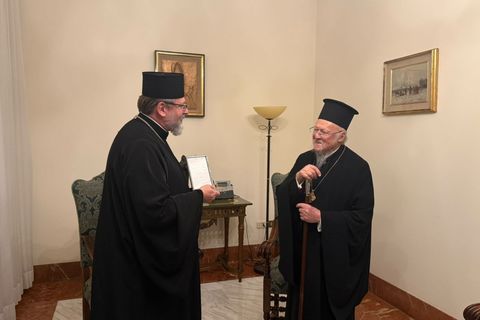
The example of priests who endured Soviet prisons and the experience of the underground community’s living faith were decisive factors in the priestly vocation of His Beatitude Sviatoslav, Father and Head of the Ukrainian Greek Catholic Church. In an interview for the “On the Frontlines of Faith” project, recorded at St. Sophia Cathedral in Rome, he spoke about his choice, the image of a priest during times of persecution, and his readiness to respond to the call—even without knowing where it would lead.
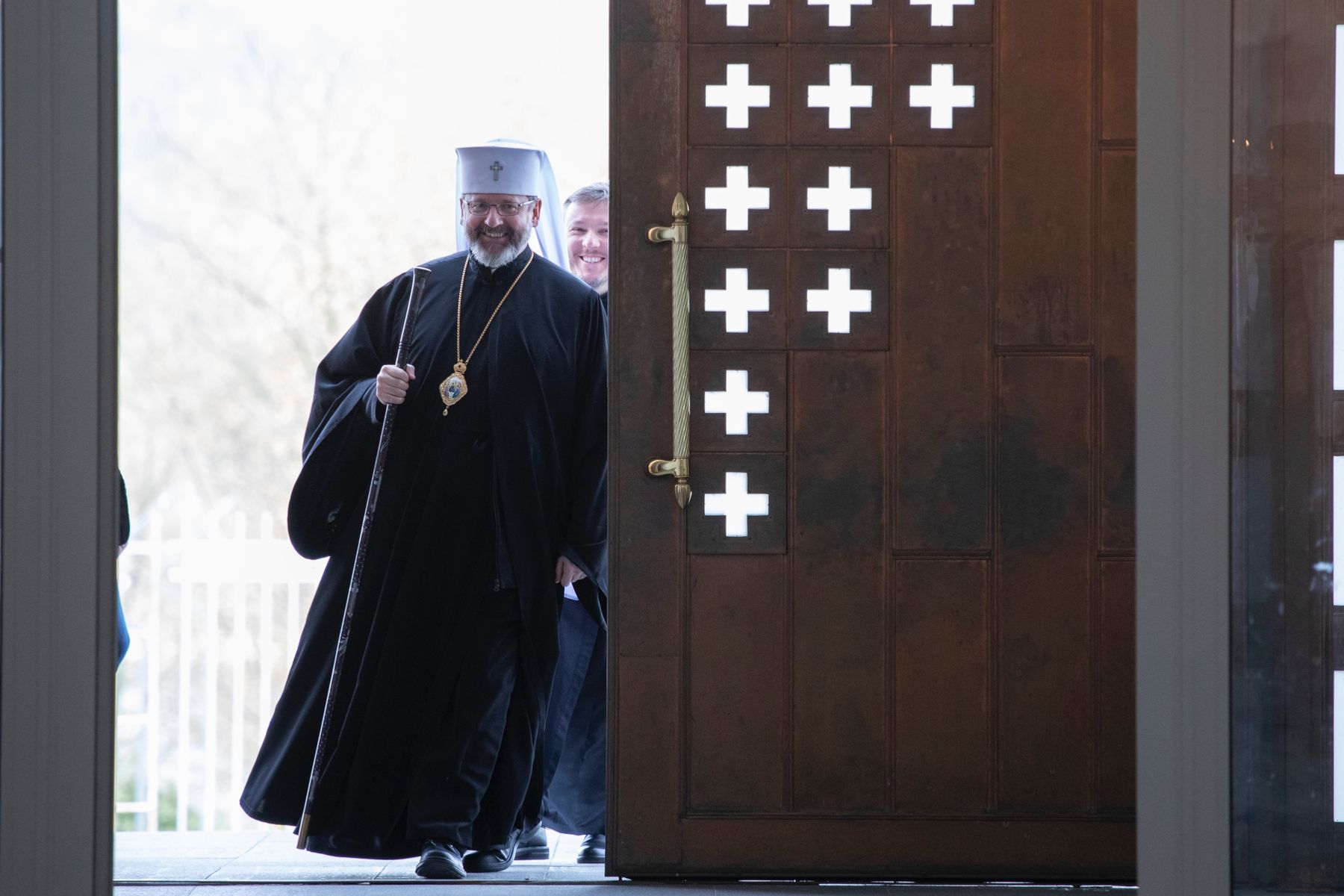
“I am a child of the underground, persecuted Church,” said His Beatitude Sviatoslav, answering a question about why he had decided to become a priest. According to him, in those circumstances, the very word “Church” meant first and foremost a community, rather than a building or sanctuary.
“In that small, persecuted community, even as a child, I experienced something genuine. I had the privilege of meeting priests who had spent years in Soviet prisons. To us young boys, they were very inspiring figures,” shared the Head of the UGCC.
He explained that young people lived as if in two worlds: they attended Soviet schools and were immersed in an atheistic environment, yet at the same time they discovered another reality—the life of the persecuted Church.
“At the very heart of this atheistic society, the true Church of Christ was present. And we, the younger generation, were so captivated by that small, persecuted, yet faithful community of believers that we decided to become like those persecuted priests,” the Primate recounted.
His Beatitude Sviatoslav attributes his personal decision to answer his priestly calling to the nightly prayerful reading of the Psalter at the bedside of the deceased. As he recalled, such prayer vigils were a special opportunity for the underground community to gather.
“When I made my choice, I was reading the Psalter. We had a tradition: when someone was dying, we would pray the Psalms at night. It was a special moment when the community gathered without fear of persecution or arrest. And in the middle of the night, a priest would come. So for us young men, the image of a priest was that of a man who comes at night,” he noted.
At the time, the future of priestly ministry seemed completely different from what it eventually became. His Beatitude Sviatoslav admitted that he could not even have imagined that one day he would preach to large crowds or have the opportunity to study in Rome.
“We rarely had access to our priests. We knew we had bishops, but we had never met them. And hearing the Holy Father’s voice on Vatican Radio was like hearing a voice from heaven for us. I never even imagined that one day I would meet the Holy Father in person,” recalled the Head of the UGCC.
 Read also:
“Accepting the Call”: Philadelphia Archeparchy Presents a Documentary on Vocations
Responding to a separate question about the influence of St. John Paul II on his priesthood, the Primate recounted a private audience he had with the Pope before returning from his studies in Rome. The Pope asked him where he was from: Lviv or Kyiv? Upon hearing the answer “Lviv,” he said, “You need to go to Kyiv. You will have a lot of work to do in Kyiv.”
“At the end of that very brief conversation, I wondered: Did he understand me correctly? But today I have to say: It was a prophetic encounter and prophetic words. Now I truly do have a lot of work to do in Kyiv,” His Beatitude Sviatoslav shared.
Reflecting on his own vocation, the Head of the UGCC emphasized that it opened up an experience for him that far exceeded his expectations at the time. Responding to a vocation, he said, means being ready to set aside one’s own prejudices and limited perceptions and “to give one’s life for something that, at this moment, one may not yet fully understand.”
The UGCC Department for Information