“There Is No Ukrainian Nation-Building Without the Role of the UGCC,” — His Beatitude Sviatoslav at Kyiv Roundtable on the Lviv Pseudo-Council
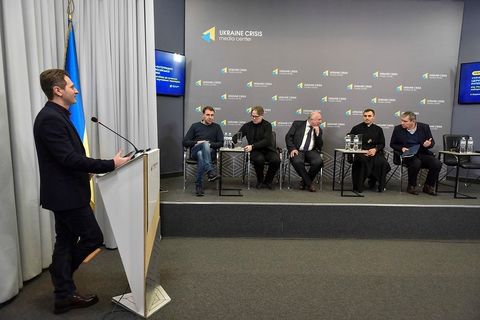
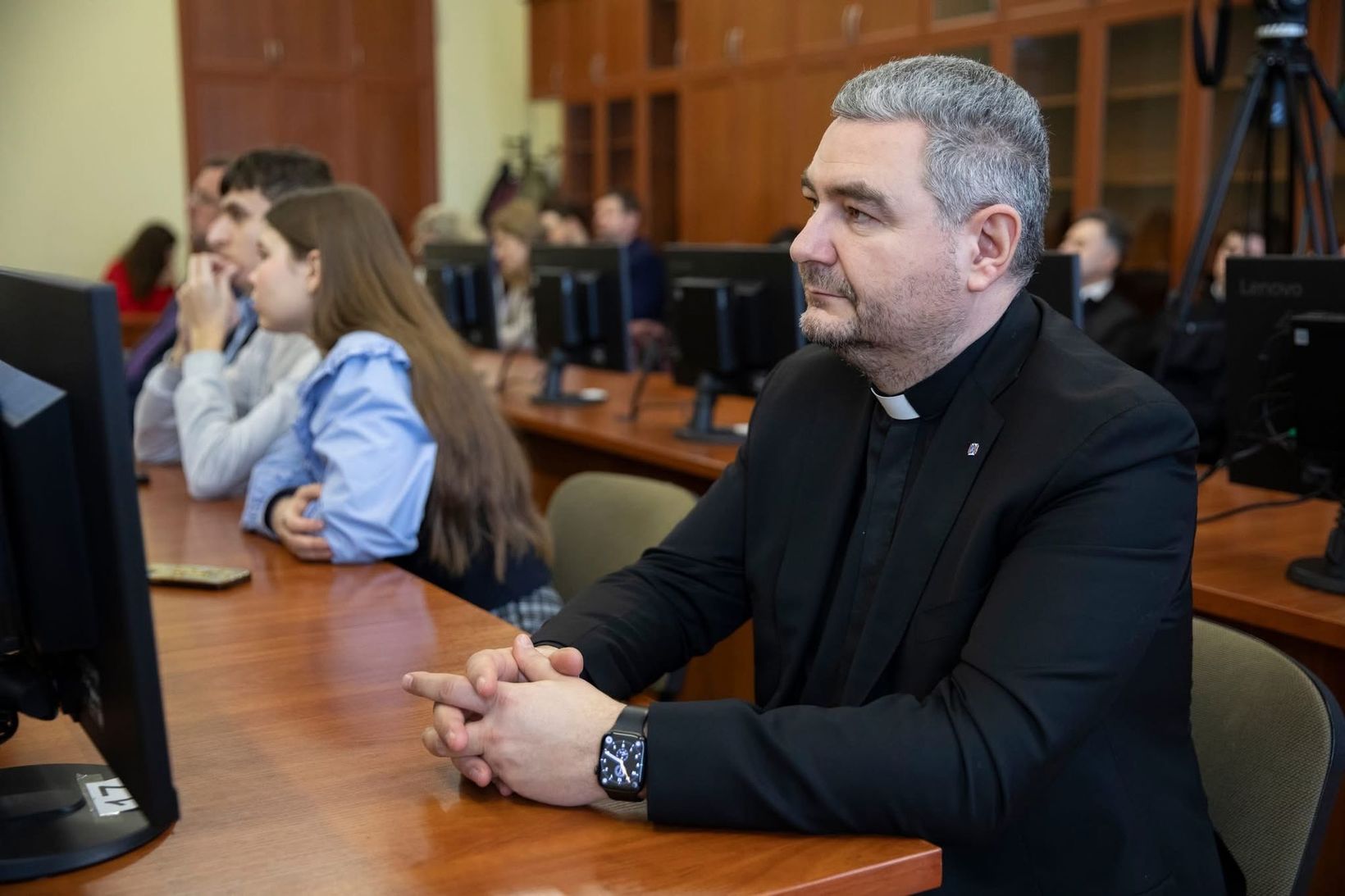
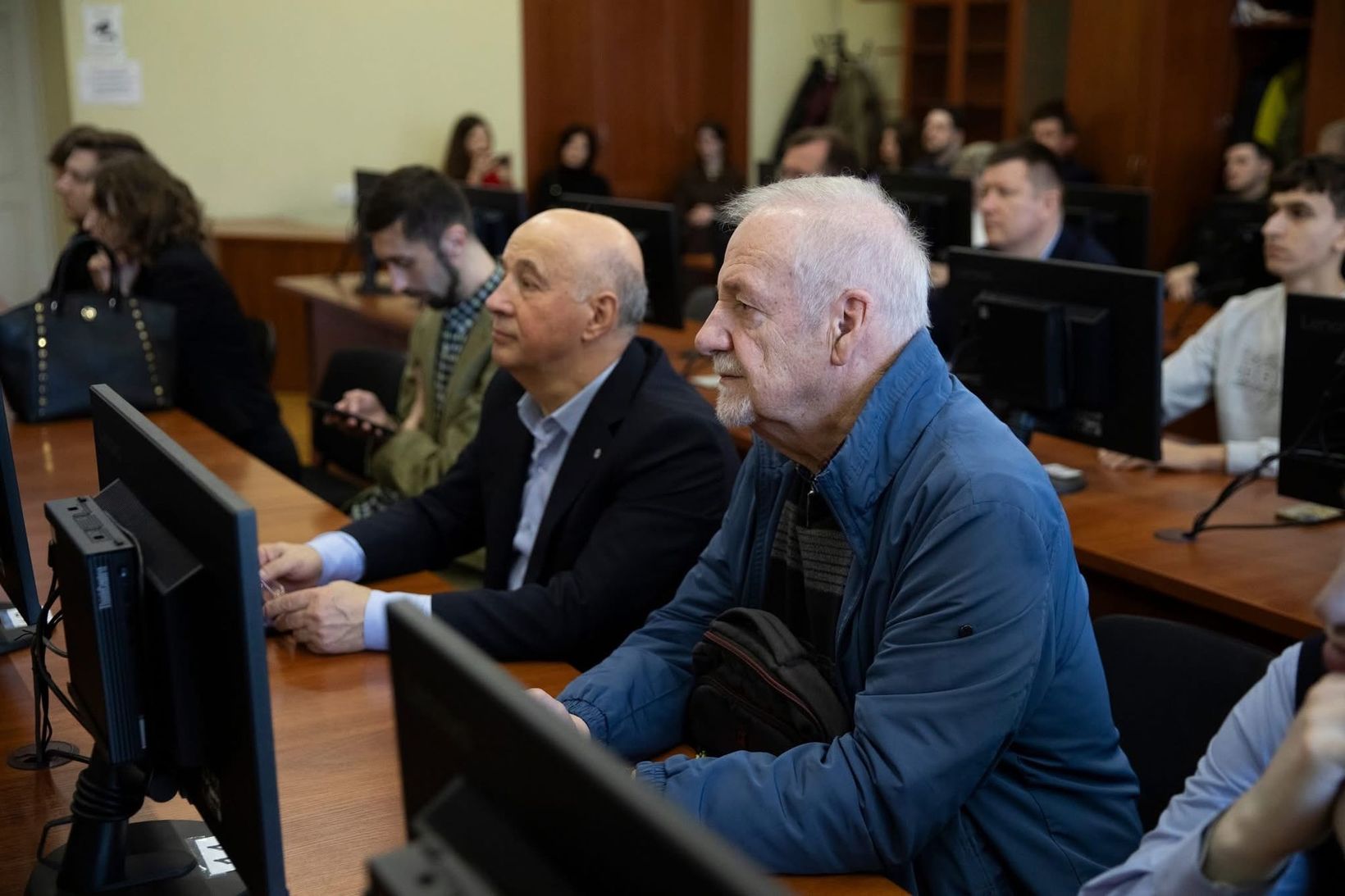
“Our history is an integral part of national memory, and without the role of the Ukrainian Greek Catholic Church, there is no process of Ukrainian national formation.” This was emphasized by His Beatitude Sviatoslav, Father and Head of the Ukrainian Greek Catholic Church, during the opening of the round table discussion “The Lviv Pseudo-Council Against the Backdrop of Russian Imperial Policy,” which was held on March 12 at Taras Shevchenko National University of Kyiv.
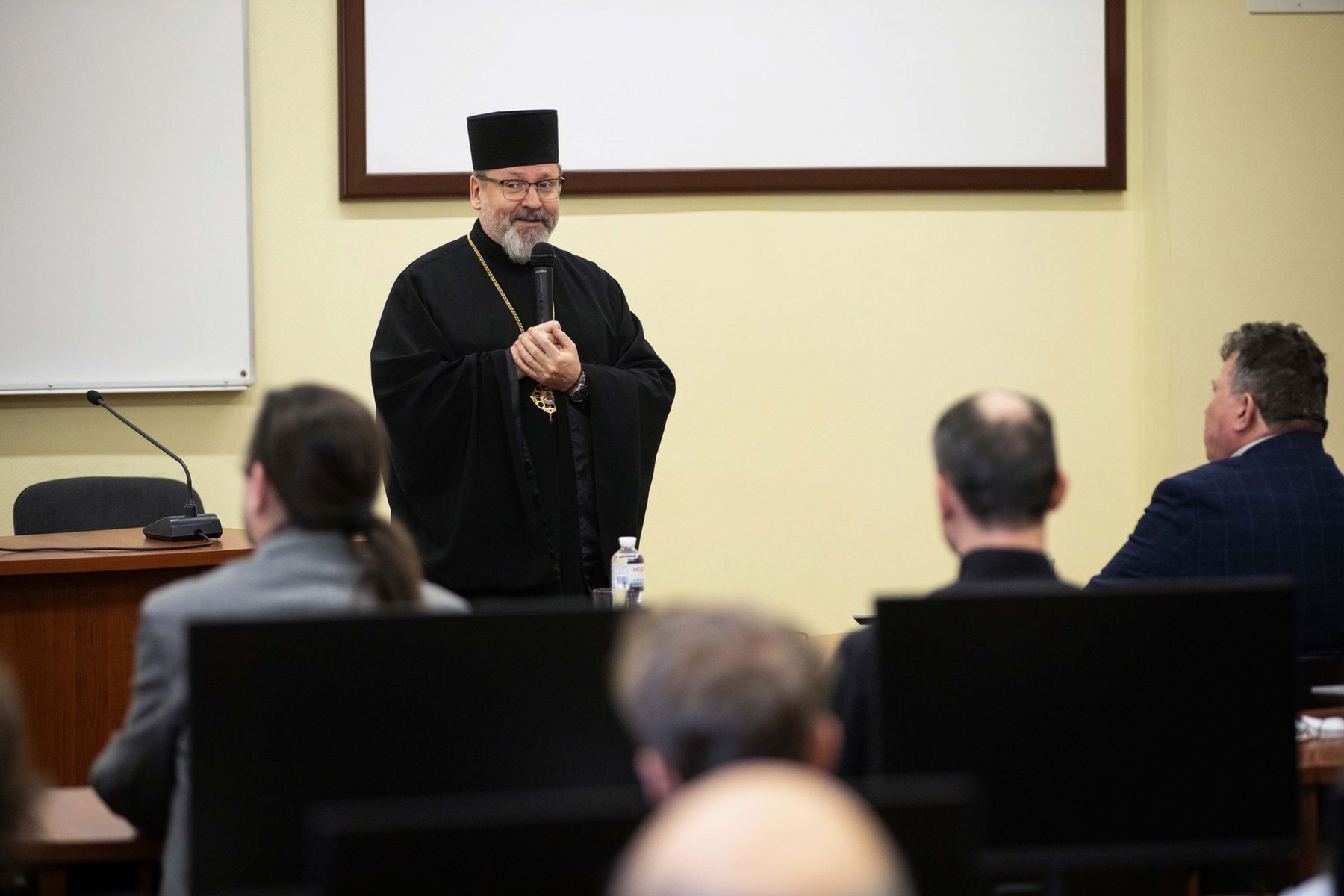
The Head of the UGCC thanked the organizers and participants of the event, describing it as a significant intellectual event, and also expressed his special gratitude to Taras Shevchenko National University of Kyiv for its long-standing cooperation and support of academic discussions. He remembered that such intellectual events have already become a good tradition for this academic space.
“It was here where we opened commemorative events dedicated to my great predecessors, Metropolitan Andrey Sheptytsky and Patriarch Josyf Slipyj. And now, for the second time, we are experiencing the sorrowful anniversary of the Lviv pseudo-council here. I remember that exactly ten years ago, we had a very serious academic discussion, perhaps for the first time in Kyiv, dedicated to this event. And now, a decade later, the Lord has brought us back to this sanctuary of science,” His Beatitude Sviatoslav said.
The history of the UGCC as part of Ukrainian history
The Head of the Church also thanked the Ukrainian Institute of National Remembrance for its cooperation in restoring historical memory and emphasized that the history of the UGCC is an integral part of Ukrainian history, although in the past it was often presented as a regional phenomenon.
“At times, we were left out of Ukrainian historiography, as if we were some kind of regional church. But today we all understand that there can be no Ukrainian national identity without the role of the Ukrainian Greek Catholic Church,” he emphasized.
The Primate expressed special gratitude to the Sectoral State Archives of the Security Service of Ukraine, which this year opened access to new documents. Thanks to these materials, he said, contemporary research on the events of 1946 can reach a fundamentally new scientific level.
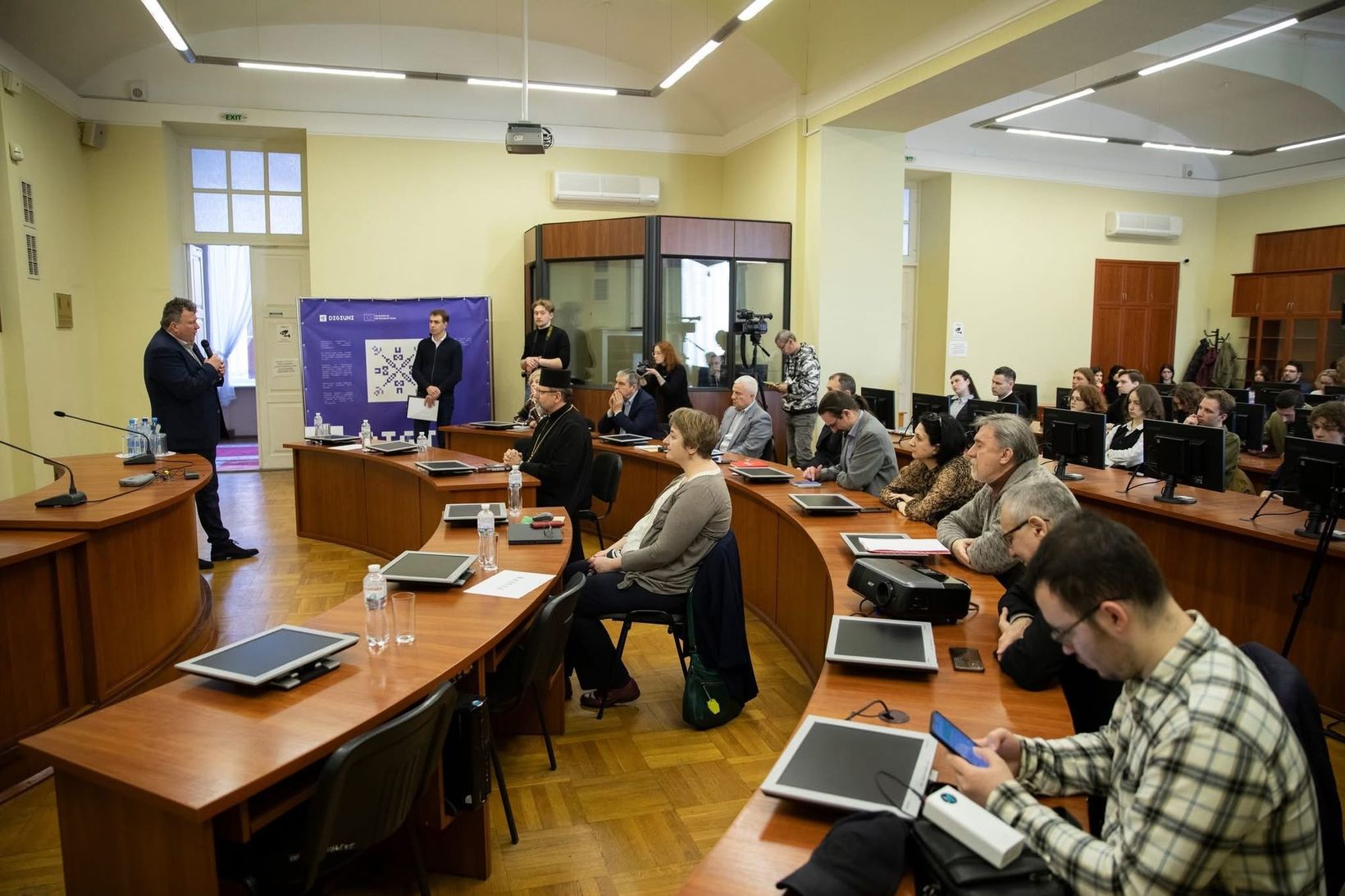
“Ten years ago, I expressed the opinion that true scientific methodology would help us free ourselves from confessional propaganda, both Catholic and Orthodox. To uncover the truth, we must trust the objective research of historians. And then we must accept this truth and look each other in the eye,” said the Head of the UGCC.
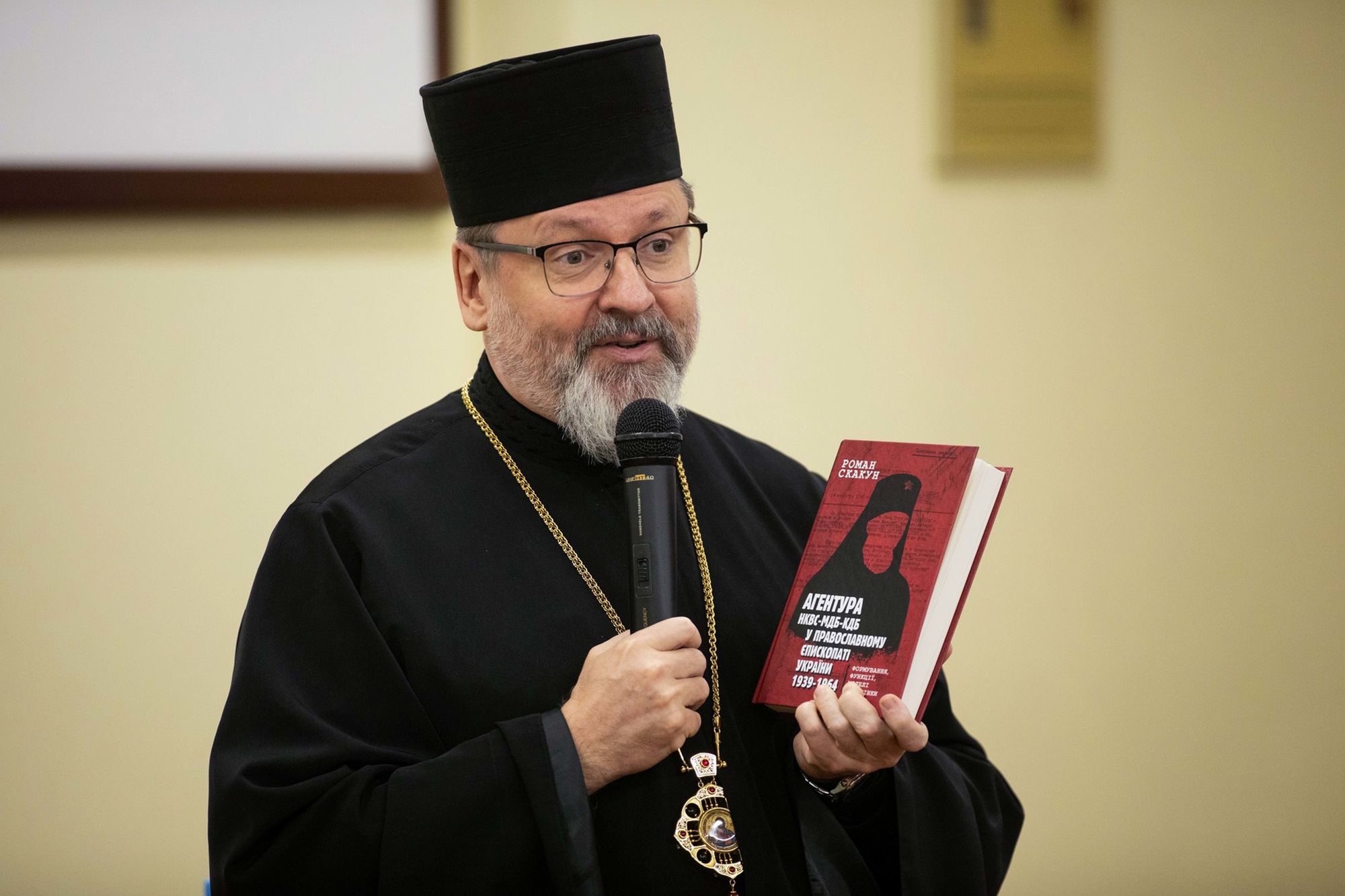
He also referred to new sources that became available after the Revolution of Dignity, in particular the documents published in the book “NKVD-MGB-KGB Agents in the Orthodox Episcopate of Ukraine (1939–1964)” by historian Roman Skakun, which deals with the network of Soviet secret service agents in the church environment.
The Father and Head of the UGCC also thanked the Institute of Church History at the Ukrainian Catholic University, which since the early 1990s has been consistently preserving the memory of the underground Church. He recalled that one of the first areas of work for the institute was “living history,” when students and seminarians recorded interviews with witnesses of the persecution:
“Hundreds of hours of such interviews with living witnesses—participants in those events and victims of the suppression of our Church—are now a unique source for researchers. Many of these people are no longer with us, but their voices remain in these recordings.”
The pseudo-council as a Soviet special operation
After the presentations by the scholars, the Primate thanked the participants in the discussion and emphasized the importance of scholarly reflection on the events of 1946.
“Today we began our reflection on this phenomenon with a presentation by Mr. Oleksandr Lysenko. This raises the question of euphemisms: what words should be used to describe what happened 80 years ago? Today, it is precisely through scientific study of sources that we are gradually overcoming the propaganda myths that still circulate, even in the vocabulary of modern Churches.
According to His Beatitude Sviatoslav, one such myth is the claim that “the Uniates voluntarily reunited with the Russian Orthodox Church.”
“But in reality, there was no freedom of conscience in the Soviet Union,” added the Patriarch. “Therefore, one cannot speak of any free activity, especially of a religious nature. It was a propaganda special operation by the Soviet secret services, aimed at eliminating the Ukrainian Greek Catholic Church. We have no right to evade the word ‘elimination’, because that was precisely its goal. Obviously, the Church was not eliminated, but the special operation to eliminate it did occur.”
Personal memories: the underground Church from within
The Primate also shared his personal memories of the underground Church environment in which he grew up.
“I grew up in the underground Church environment. An underground priest came to serve us, and an Orthodox dean, a participant in the Lviv pseudo-council, lived nearby. Every day I would greet him with ‘Glory to Jesus Christ!’ on my way to school. There was also a priest living in the neighborhood who withdrew his signature and repented when Nicholas Charnetsky returned from exile. In fact, he acted as a Greek Catholic priest while living in an Orthodox parish. As an underground seminarian, I studied Latin with him,” His Beatitude Sviatoslav said.
According to him, the events of 1946 had no ecclesiastical character, and the use of the term “council” is a product of Soviet propaganda.
“All those who today use the terms ‘council’ or ‘Lviv Council’ of 1946, unfortunately, remain within the framework of Soviet propaganda. It was not a church act, but a special operation.”
The Moscow Patriarchate and Putin’s Concordat
The Head of the UGCC also mentioned a letter that His Beatitude Lubomyr wrote to the Moscow Patriarch in the context of the 60th anniversary of this special operation, proposing to face the truth.
“Then Metropolitan Kirill, who headed the department of external church relations, responded with Soviet clichés of the propaganda of that time. He spoke of a ‘council,’ a ‘church council,’ as a counterweight to the Council of Brest in 1596. So, what was this Church with which they wanted to reunite us? Scholar Roman Skakun uses the term ‘era of the Stalinist concordat’ (agreement) of 1943–1957… Why, for example, do we not see any willingness on the part of the Moscow Patriarchate today, at least in terms of terminology, to change its rhetoric regarding this event? Because today they are experiencing the time of Putin’s concordat,” emphasized His Beatitude Sviatoslav.
He then focused on the fact that today the Russian Orthodox Church is an instrument for eliminating the phenomenon of Ukrainian identity, “especially when it comes to any manifestation of church life.”
Church in the occupied territories
Speaking about the life of church communities in the temporarily occupied territories of Ukraine, the Head of the UGCC emphasized: “We do not observe stagnation in church life. We observe the destruction of civil society.”
“Our cathedral in Donetsk is closed,” he continued. “The last priest was forced to leave in January 2023. Lay people came to pray, but one day they found the doors sealed. The cathedral stands, the community exists, but there is no legal visible life of our Church there today.”
The Primate added that this community was one of the first to be registered during the Soviet era after Mykhailo Horbachov’s visit to the Vatican.
“I was a Soviet soldier in Luhansk at the time and transferred my soldier’s salary to the account of this parish in Donetsk because I read that it had legally resumed its activities. What was allowed even in the Soviet Union is now prohibited in the occupied territories,” noted His Beatitude Sviatoslav.
Conclusion: lessons for today
In conclusion, he emphasized that the Church is capable of surviving even under persecution: “From institutionality to networking, from visible structures to community life — this is how the Church exists under persecution. What happened today at this round table revives the memory of this tragedy and should teach us how to act today—as believers, as Greek Catholics, and as citizens of Ukraine,” he summed up.
In conclusion, His Beatitude Sviatoslav wished the participants of the round table fruitful scientific work and expressed his hope that contemporary research will help to form a renewed and true vision of the history of the Church and Ukraine.
The UGCC Department for Information