Baptism in Zaporizhia. “Soldiers, both active-duty and veterans, are very open to the word of God,” says Father Oleksandr Bohomaz
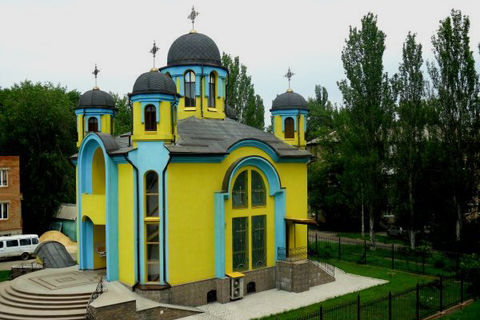
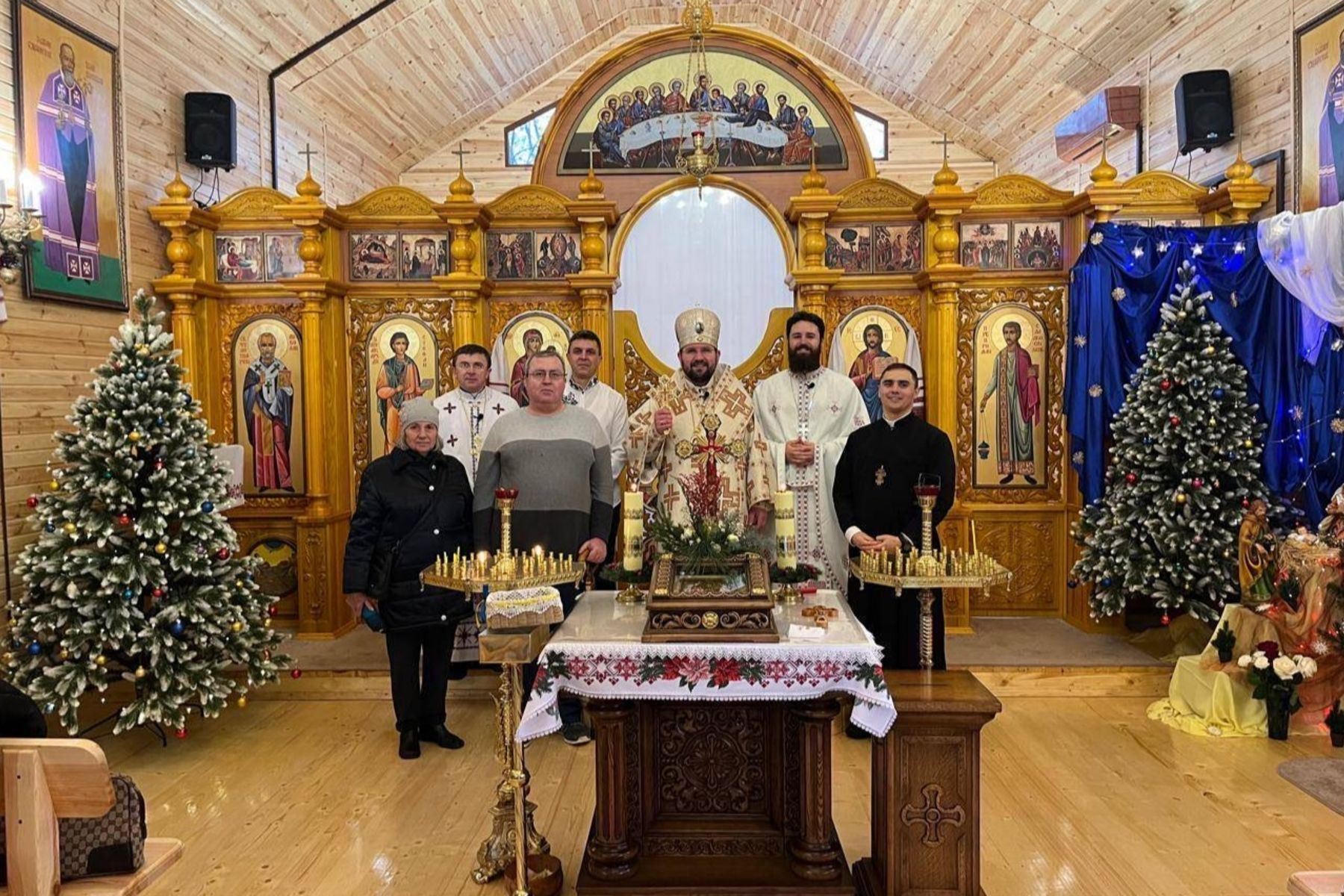
On Epiphany, January 6, in Zaporizhia, at the parish of St. Michael the Archangel of the Ukrainian Greek Catholic Church, an extraordinary yet increasingly common event took place—the baptism of a person who knows war firsthand. The sacrament was administered at St. Volodymyr’s Church by Bishop Maksym Ryabukha, Exarch of Donetsk of the Ukrainian Greek Catholic Church.
The spiritual preparation of the newly baptized was conducted by Fr. Oleksandr Bohomaz, a priest of the Ukrainian Greek Catholic Church from Melitopol, who has been serving in Zaporizhia for three years. In December last year, he became the rector of the newly established parish of St. Barbara of the Ukrainian Greek Catholic Church. The impetus for this decision was a retreat led by Fr. Bohdan Heleta, a Redemptorist from Berdiansk who spent 20 months in Russian captivity.
The newly baptized man is a mature adult and a veteran. Zaporizhia is his hometown, where he was born and raised. For many years, he lived and worked in Kyiv as a journalist. After the deaths of his grandmother and grandfather, he returned to Zaporizhia. With the beginning of the full-scale invasion, he volunteered for the Armed Forces of Ukraine. During the first year of the war, he sustained multiple injuries, underwent medical treatment, and was discharged from military service due to health reasons. He continues to recover and undergo rehabilitation.
“After his discharge from the Armed Forces, he attended a spiritual retreat in Ivano-Frankivsk led by Father Bohdan Heleta. Following the retreat and his conversations with Father Bohdan, he decided that he wanted to be baptized,” says Fr. Oleksandr. “After returning to Zaporizhia, he approached Father Andriy Bukhvak, parish priest of St. Michael the Archangel and rector of St. Volodymyr’s Church. At that time, I was serving as an assistant at the parish, and Father Andriy referred him to me for preparation for the Sacrament of Baptism.”
Today, there are many examples of adults seeking to receive the Sacrament of Baptism, including military personnel, veterans, and civilians, particularly in frontline regions. Fr. Oleksandr also shared another recent example: a French citizen serving in the Armed Forces of Ukraine who, after returning from the front line, told his commander that he wished to be baptized. The commander contacted a Roman Catholic priest, and the soldier received baptism in his own rite.
“When we live in familiar circumstances and lead a familiar life, many things become routine, and we may fail to notice God’s action. But in the difficult conditions Ukrainians are living through today—on the front lines, in frontline regions, in the rear, and under occupation—God’s presence becomes more visible,” Fr. Oleksandr explains. “I have been serving in Zaporizhia for three years, and during this time I have witnessed that both active-duty military personnel and veterans are very open to evangelization and to the word of God. They are open to accepting Jesus as their Lord and ready to change their lives. Of course, there are also those who are closed in on themselves, in their trauma and lived experiences. But those who open themselves to God do emerge from these crises. It is not an easy path, but it is possible with God’s help.”
Spiritual retreats for military personnel and veterans, organized by priests and monastics of the Ukrainian Greek Catholic Church, take place in western Ukraine, both as part of general rehabilitation programs and as dedicated spiritual renewal initiatives. Information about these retreats is disseminated by UGCC parishes, church organizations, and veteran communities. Military personnel, veterans, and their families are welcome to participate.
“In Zaporizhia, under current conditions, it is impossible to conduct such spiritual retreats, despite the great demand,” Fr. Oleksandr notes. “There have been multiple cases when servicemen on leave were wounded here in the city by shelling—some sustaining severe injuries, including amputations. One was killed by a Shahed drone while on leave. Therefore, spiritual renewal requires conditions that allow a person to distract as much as possible and spend at least a day in silence.”
At the same time, UGCC clergy continue to serve military personnel directly on site.
“We maintain contact with many servicemen and try to minister to them both during the week and at Sunday Liturgies. We also care for units that do not have chaplains. Although we are eparchial priests and not military chaplains, with the commanders’ consent we travel to serve and support our soldiers, because there is a clear need.”
Very often, even those who consider themselves non-believers are open to God. The question, Fr. Oleksandr says, is why they consider themselves non-believers in the first place. In most cases, it is not due to a conscious rejection of faith, but because no one revealed God to them at the right time. This is a vast void, particularly in southeastern Ukraine and within the territory of the Donetsk Exarchate. In the past, this void was partly filled by Protestant communities, which actively evangelized and introduced people to God. Representatives of the Ukrainian Orthodox Church of the Moscow Patriarchate, however, often led people into superstition and fear unrelated to faith in the living God. And this is truly evil—both against the Church and against the people.
Today, most of the territory of the Donetsk Exarchate of the UGCC—which includes Donetsk, Zaporizhzhia, Dnipropetrovsk, and Luhansk regions—is under Russian occupation. The seat of the exarchate has been relocated from Donetsk to Zaporizhia. Fifteen UGCC communities in the Zaporizhia region, including the largest ones in Melitopol and Berdiansk, are currently under occupation, where the UGCC is banned and persecuted.
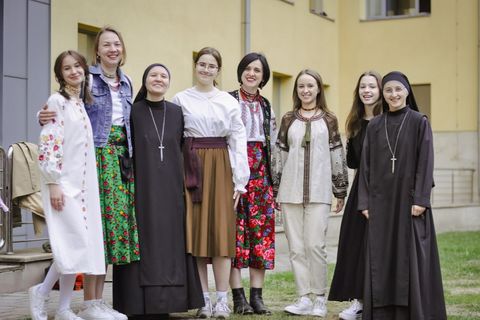
At the same time, the Church is developing actively in frontline Zaporizhia. The city now has three long-established parishes with parish churches and one newly established parish in the Khortytskyi district. There is also a monastery of the Sisters of the Order of St. Basil the Great, with a church dedicated to Saints Peter and Paul.
Compiled by Oksana Kozak
The UGCC Department for Information