An Appeal to Stop Religious Persecution in Russian-Occupied Ukraine
An Appeal to Stop Religious Persecution in Russian-Occupied Ukraine
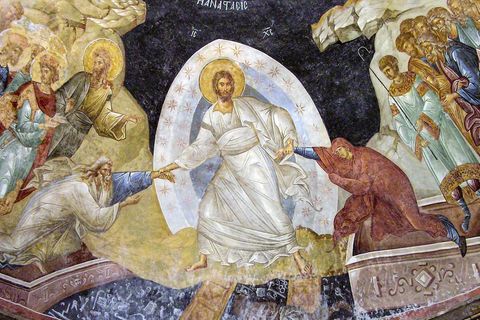
We, religious scholars and representatives of diverse faiths and confessions, gathered at The Catholic University of America for a conference on “The 1946 Pseudo-Sobor: Eighty Years Later — The Persecution Continues” (March 27–28, 2025), appeal to American Catholics, Christians, and all people of good will this Holy Week to unite in prayer and solidarity with the Ukrainian people, their Churches and religious organizations, as they continue to walk the Way of the Cross at great cost, making the ultimate sacrifice, emulating Christ in His Passion on the way to the Resurrection.
During the two-day conference, we examined the Soviet-orchestrated Pseudo Sobor of 1946 — a calculated act of state violence which outlawed the Ukrainian Greek Catholic Church after arresting its bishops and terrorizing its clergy. This study of the past was combined with an eye to the present: the ongoing Russian aggression against Ukraine and its devastating effect on religious freedom. We engaged scholars and survivors alike: those who have studied the persecution and those who have lived it. Their witness and research show what is at stake when violence, war crimes, and religious persecutions go unchecked; when Russian ideologies of empire and colonialism are passed from one generation to the next.
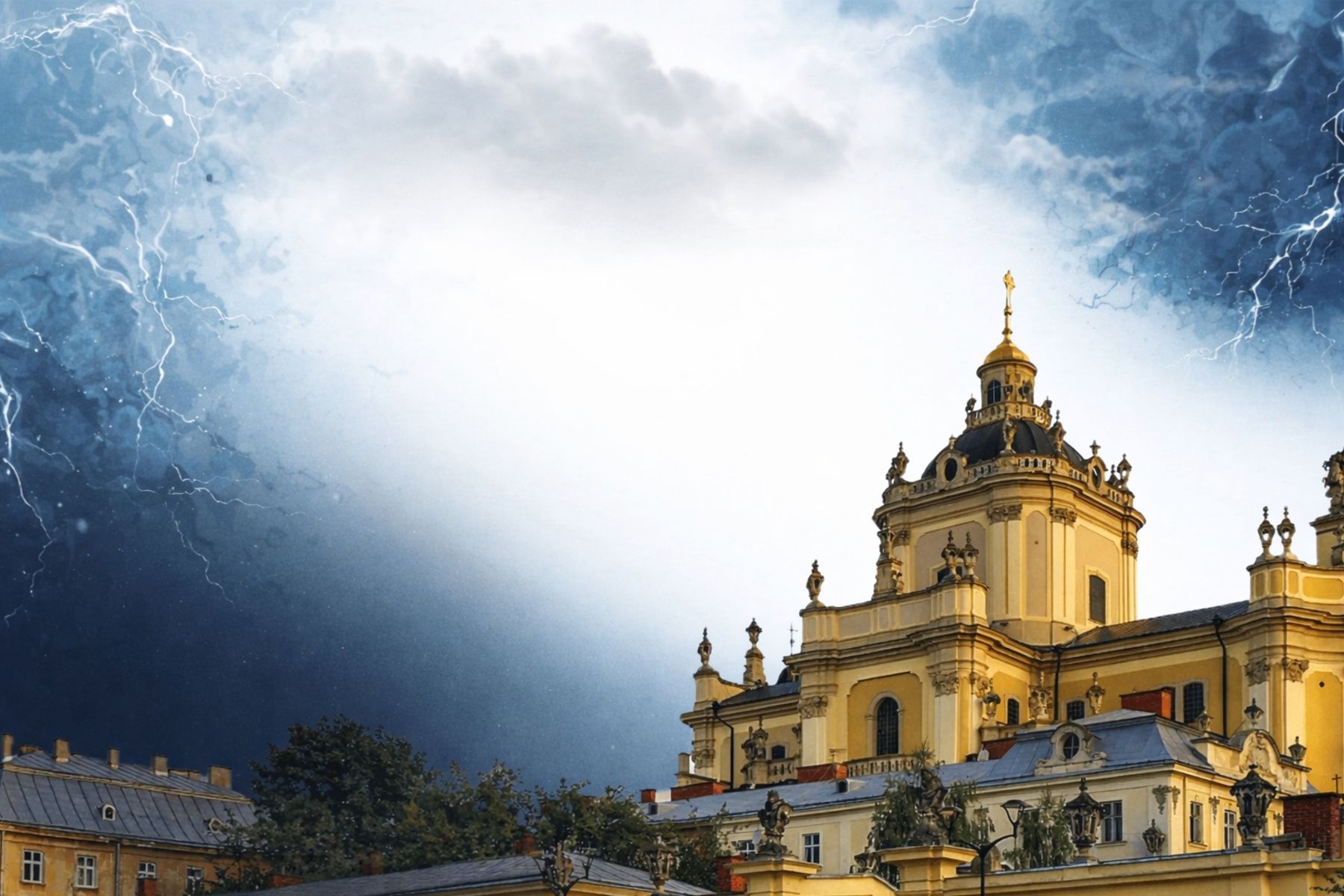
As of the end of 2025, 737 places of worship have been damaged or destroyed in Ukraine by Russian aggression. 67 clergy members across denominations have been killed. At least 2,881 attacks on healthcare have been documented, including strikes on hospitals, ambulances, and medical warehouses. 4,048 schools have been damaged and 408 destroyed, affecting millions of children. And it continues. As recently as March 24, a Russian drone attack struck five meters from a UNESCO-listed 17th-century church in Lviv.
History and the present speak with one voice: the freedom of one is the freedom of all. The torment of Ukraine, the occupied territories and Crimea cannot be remote for us. It should be our anguish, our concern, and an imperative for our action.
For obvious reasons in wartime, little can be said regarding religious life today sustained clandestinely under Russian occupation. Yet we are inspired by the historic and present fortitude of the persecuted: After the 1946 Pseudo Sobor, the Ukrainian Greek Catholic Church survived forty-five years in the underground and rose again. Where there is faithfulness, there will be resurrection.
As we contemplate Christ’s Passion, we urge all to look to Ukraine. Each day, churches, schools, hospitals, and homes are struck by missiles and drones. Civilians are killed and maimed. Children are abducted. Women are violated. People are persecuted for their faith and silenced for speaking the truth.
They cannot raise their voices. We must raise ours. This is a moment for Christians and people of good will to demonstrate what is in short supply: the courage to call evil evil and to refuse to evade the truth by hiding behind diplomatic silence.
Pray for peace and justice in Ukraine. Advocate for persecuted communities. Continue partnerships of generosity and create new ones with those who defend God-given human dignity and religious freedom. In this season of death and resurrection, solidarity with those who suffer will be our most authentic witness to the Passion and Resurrection.
Signed:
His Beatitude Sviatoslav
Head of the Ukrainian Greek Catholic Church
Metropolitan Borys Gudziak
Ukrainian Archbishop of Philadelphia
Very Rev. Dr. Mark Morozowich
The Catholic University of America
George Weigel
Ethics and Public Policy Center
Rev. Dr. Mykhailo Cherenkov
Tavriski Christian Institute
Sergei Chapnin
Orthodox Christian Studies Center, Fordham University
Rev. Mykhailo Brytsyn
Mission Eurasia
Dr. Anatolii Babynskyi
Ukrainian Catholic University
Dr. Maksym Vasin
Institute for Religious Freedom
Rev. Dr. Yuriy Shchurko
Ukrainian Catholic University
Dr. Kateryna Budz
University of Edinburgh
Dr. Anastacia Wooden
The Catholic University of America
Dmytro Vovk
Yaroslav the Wise National Law University
Lewis Ayres
Angelicum
Sophia Charron
St. Gabriel Institute
Taras Zvir
The Catholic University of America
Joshua Ortiz
The Catholic University of America
Maria Christina Kardash
John Figel
Orientale Lumen Foundation
Thomas Bukoski
Jurij Dobczansky
Peter Metrinko
Lubomyr Kormeluk
Dr. Jeffrey Dirk Wilson
The Catholic University of America
Rev. Daniel Cogut
Dr. Thomas Sayre, OFS
Seton Home Study School
Alexander Lee
The Catholic University of America
Mr. John Suarez
Center for a Free Cuba
Orest Deychakiwsky
Ukrainian Catholic University Foundation (UCUF); The Washington Group
Wayne Dzwonchyk
St. Josaphat Council, Knights of Columbus
Orest Deychakiwsky
Dr Hugh Dempsey. GCMOb
Dr Andrew Sorokowski
Iryna Sonia Yasinska Graves
Mrs Segolene Mykolenko
Ukrainian Catholic Eparchy
Anne Chermak Dillen
Ukrainian Catholic University Foundation
Russell Kaczmar
Daria Klem
Adrienne Black
The Catholic University of America
Professor Nelson H. Minnich
The Catholic Historical Review
apl. Prof. Dr. Andriy Mykhaleyko
Catholic University of Eichstaett-Ingolstadt
Msgr. Peter D Waslo
Archeparchy of Philadelphia
Walter Iwaskiw
Michael Sawkiw
Ukrainian Congress Committee of America
Dr Merylann (Mimi) Schuttloffel, phd
The Catholic University of America
Mr. Marvin Schuttloffel